
South Africa's Companies and Intellectual Property Commission is looking for an AI chatbot that can handle roughly two million customer interactions every month. The tender covers everything from development and hosting to security and ongoing support, spread across three years. On paper, that sounds like exactly the kind of contract that could put a young African AI company on the map. The catch is buried in the payment terms: no advance payments, and invoices only become payable within 30 days after the work has been received and accepted.
For an early-stage startup, that condition changes the entire calculation. Winning the contract means funding your team, your infrastructure, and your technology stack out of pocket, sometimes for months, before a single invoice clears. The deal that promises credibility and revenue can quietly become a cash flow crisis, with a young company carrying the full cost of serving a public institution while waiting on a return that is always 30 days behind the work.
This tension sits at the heart of a forthcoming report called AI Made in Africa, produced by GIZ and Briter and due to launch in October 2026. Among the businesses surveyed, 44 percent say they target governments as clients, and 32 percent name access to public procurement as a top policy priority. Yet those same founders are dealing with long sales cycles, expensive infrastructure needs, and a shortage of the patient capital that could bridge the gap between signing a contract and actually getting paid.
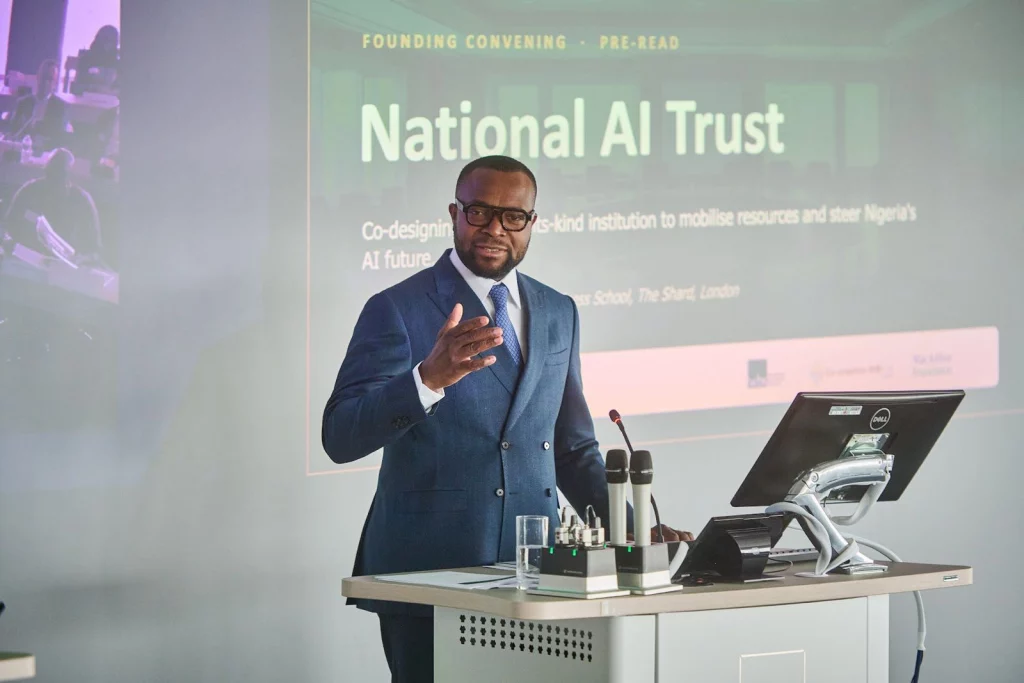
Nigeria's N-ATLAS project offers a useful illustration of how complicated this picture gets. Announced in April 2024 and unveiled in September 2025, the language model project saw the government work with Lagos-based Awarri to develop the technology. That confirms a real collaboration took place. But what it does not tell us is how long procurement took, what the contract was worth, or when payments were scheduled. TechCabal's reporting also noted the project still relied on foreign cloud infrastructure, a detail worth sitting with.
Founders surveyed for the AI Made in Africa report put it plainly: moving from short-term pilots to long-term institutional partnerships would significantly accelerate growth. The appetite for government AI contracts across the continent is real, and so is the technical talent ready to meet it. The open question is whether procurement systems are designed to let startups not just qualify and deliver, but actually survive the wait between doing the work and seeing the money.
Originally published by TechCabal.