
For every 10 dollars borrowed through OPay in the first half of 2026, the fintech kept about 1.27 dollars after setting aside money for expected loan losses. That single figure tells you a lot about how tight the economics of digital lending actually are in Nigeria right now.
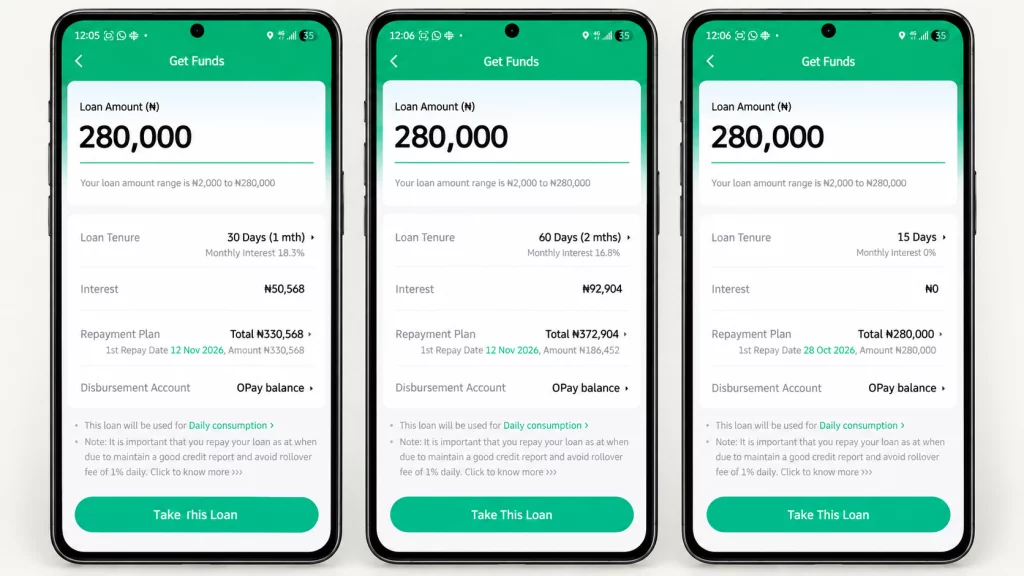
OPay originated 927.6 million dollars in loans in Nigeria during that period and earned 236.12 million dollars in loan-financing revenue, a figure that includes accrued interest and late-payment penalties, not just the headline rate charged to borrowers. The company then provisioned 118.36 million dollars for expected credit losses, roughly 1.28 dollars for every 10 lent. On a 280,000 naira loan through the OPay app, TechCabal was quoted 0% interest for a 15-day repayment window, 18.3% for 30 days, and 16.8% for 60 days. Those rates apply to the full repayment period, not on an annual basis.
One detail worth sitting with: borrowers who repay on time may effectively be absorbing part of the cost of lending to those who do not. That is how consumer credit is priced anywhere in the world, but it lands differently in a market like Nigeria, where the Central Bank benchmark rate sat at 26.5% during the same period and OPay's loan-financing revenue came in at 25.5% of originations.
The company reported a non-performing loan ratio of 4.3% as of June 30, 2026, which looks healthy next to the banking industry's 8.03%. But OPay writes loans off at 120 days past due, while conventional banks do not classify loans as losses until 360 days. A loan OPay has already cleared from its books could sit on a bank's balance sheet for another eight months, which makes a straight comparison tricky. OPay does not disclose what its NPL ratio would look like under the longer timeline.
Nigeria's consumer lending market is estimated at 2.1 billion dollars, and OPay is clearly a serious player in it. The more interesting question is what the numbers look like once the IPO prospectus invites even closer scrutiny.
Originally published by TechCabal.