
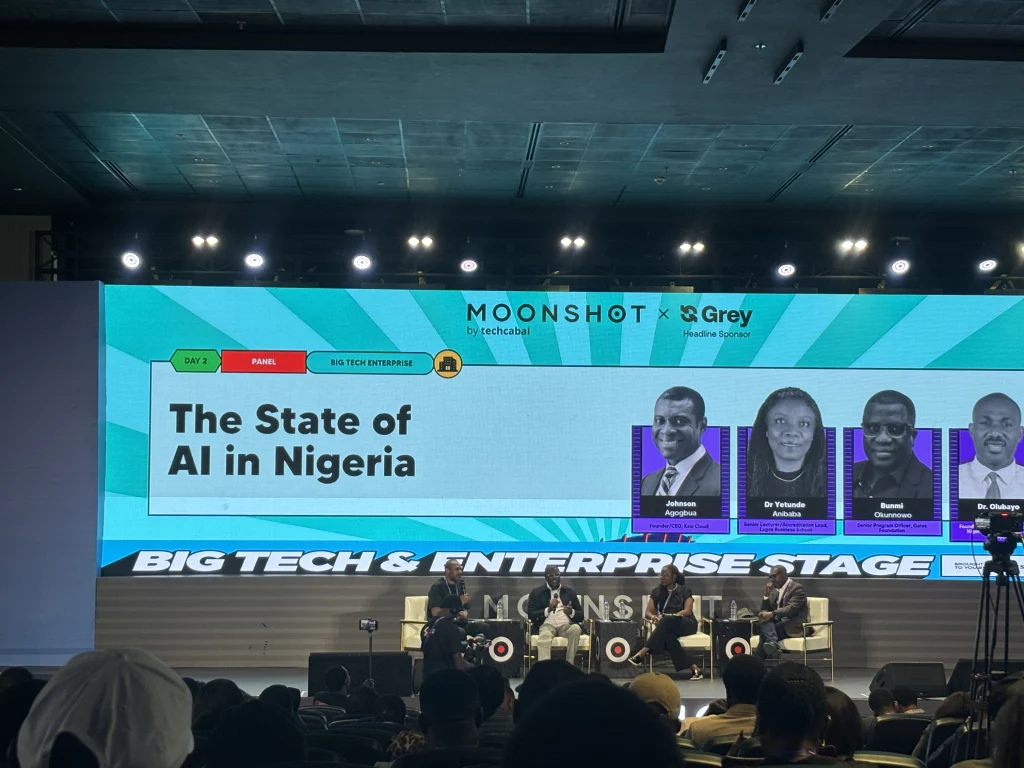
At a session called "The State of AI in Nigeria" held during Moonshot by TechCabal on 29 October, one idea kept coming up: Nigeria can import the most advanced AI tools on the market and still miss the point entirely. The question is not what the technology can do. The question is whether it solves problems that actually matter to Nigerians.
Olubunmi Okunowo, a senior programme officer at the Gates Foundation, put it plainly. "We're building AI, but there are lots of nuances that people in the field who use these tools have that we must incorporate into our building," he said. Technical skill gets you started, but you need people who understand the problem from the inside before you write a single line of code.
A 2024 GSMA report on AI use cases in Nigeria backs that up, finding that local data, skills and infrastructure determine whether AI tools get built and actually used. Tools that ignore local languages or local working conditions risk locking out the very people they were designed to serve.
Johnson Agogbua, founder and CEO of Lagos-based data-centre operator Kasi Cloud, kept his focus on outcomes: AI in Nigeria should deliver productivity, especially in healthcare and agriculture, where it has real potential to change how work gets done. Dr Yetunde Anibaba of Lagos Business School added that affordability and access are just as critical as the product itself. She pointed to the Nigeria AI Scaling Hub, hosted at Lagos Business School and supported by the Gates Foundation, which helps AI products reach scale in healthcare, agriculture and education. She also called for clearer policy to accelerate adoption, particularly in the health sector.
For founders building in this space, the panel's collective message is a practical checklist: bring in domain experts early, design for the end user from day one, and sort out cost, access and regulatory questions before you launch, not after.
Originally published by TechCabal.