
“It has to touch the lives of people”: the Gates Foundation’s challenge to Africa’s AI builders
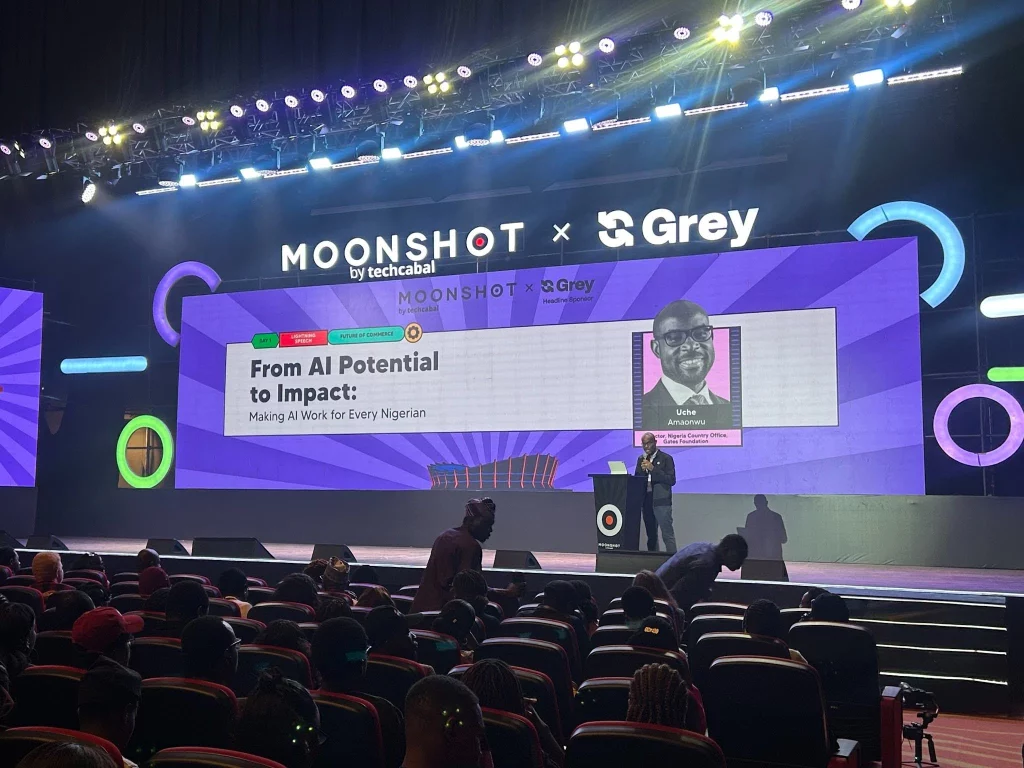
Uche Amaonwu, the Gates Foundation's Nigeria director, had a pointed message for Africa's AI builders at Moonshot by TechCabal in Lagos: stop counting products and start counting lives changed. Speaking during a keynote address, he challenged developers and investors to measure the success of their tools by real improvements in healthcare, education and incomes, not by how many applications make it to market.
His remarks came with a clear warning. The Foundation's Goalkeepers report on AI and equity, released around the UN General Assembly, framed the moment as both exciting and cautionary. Amaonwu quoted its central tension directly: "If we are not deliberate about how AI is developed and deployed, we could end up widening the very inequalities that we're actually trying to close." The promise of AI as a great equaliser, he made clear, is not a given.
The Foundation's own priorities set the bar for what "impactful" actually means. Their work is anchored to three goals: reducing avoidable maternal and child deaths, shielding the next generation from deadly infectious diseases, and pulling hundreds of millions of people out of poverty. Amaonwu called these "human condition goals," and said AI's real value would be measured by how much it speeds progress toward them.
For Africa's growing developer community, the challenge is practical as much as philosophical. Promising tools are already in trials across the continent, but moving them into the hospitals, schools and communities that need them most is where the real work begins. Whether builders and funders take that seriously is the question worth watching.
Originally published by TechCabal.