
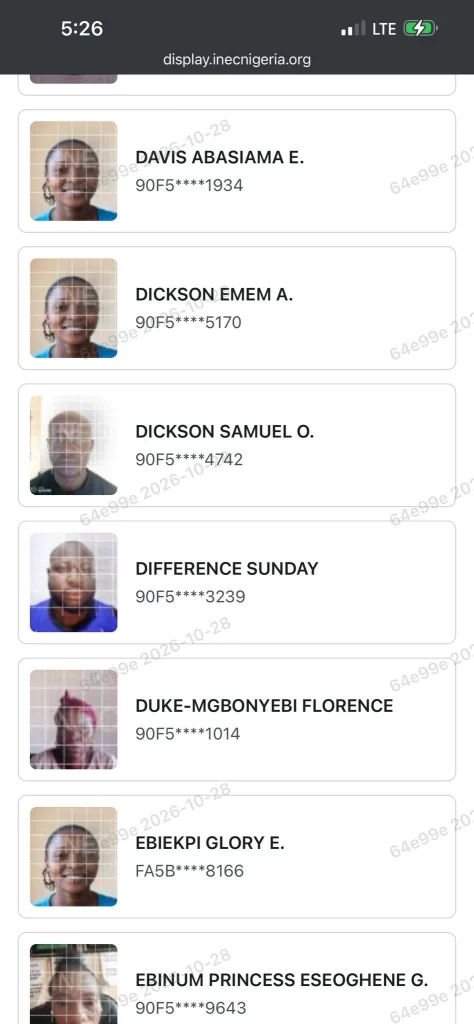
Suspicious photographs in Nigeria's preliminary voter register grabbed the headlines, but the more unsettling detail came from inside the building. Lawrence Bayode, INEC's director of information and communication technology, confirmed on 30 October that registration officers with authorised access to the commission's core database were directly responsible for inserting irregularities into the system. The photographs may have been AI-generated, but the hands that uploaded them belonged to INEC staff.
The preliminary register now lists more than 103 million voters, up from roughly 93 million in 2023. INEC credits the jump to new registrations, but that explanation has done little to quiet critics. Clement Nwankwo, director of the Policy and Legal Advocacy Centre, challenged the register's credibility on ARISE News, pointing to both the suspicious images and unexplained statistical surges across states. His concerns reflect a growing public demand for INEC to show its work, not just clean up after itself.
Bayode told reporters the commission caught the discrepancies through automated biometric identification system checks and is working to resolve them before the final register drops on 15 December 2026. That is the correct response, but it raises an obvious follow-up: if the people authorised to register voters are the ones introducing bad data, the problem is not the technology. It is governance, access controls, and accountability for the individuals operating registration terminals.
With the 2027 general election approaching, INEC now has to do more than scrub dubious entries. It has to convince Nigerians that the entire pipeline, from data collection to final audit, is worth trusting. Whether the commission can make that case before December is the real question on the table.
Originally published by TechCabal.