
Shalom Rayhamen built the first version of Lagos Life in eight hours. By October 9, 2026, just nine days after launch, the city-based simulation game was claiming more than $170,000 in earned and contracted revenue. That is a remarkable turnaround for what started as an overnight project.
The game is free to play, but the money is in the billboards. Businesses pay to reach Lagos Life's growing player base through virtual advertising plots spread across in-game versions of Lagos, Port Harcourt, and Abuja. When TechCabal counted on a Friday morning, there were 244 advertisements running across 40 virtual billboards. At the disclosed rate of 250,000 naira ($188) per ad per week, that single seven-day period represented roughly 61 million naira ($45,870) in advertising value.
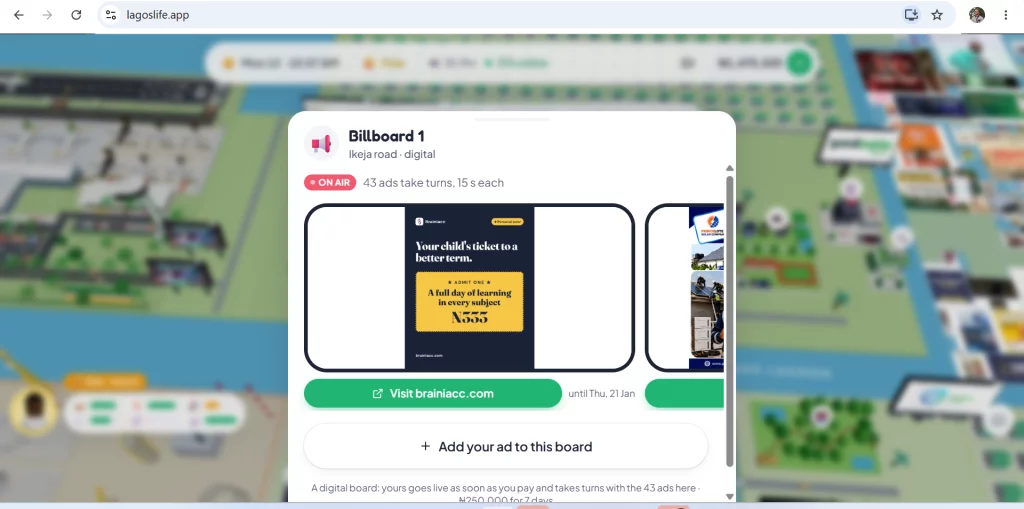
The math gets more interesting when you zoom in. One billboard alone carries 43 advertisements, putting its weekly value at 10.75 million naira ($8,083). Some advertisers have already booked additional weeks, and the count is likely higher now than when TechCabal checked.
What makes the model work is the way the same physical space serves multiple buyers at once. Players browse rotating ads or tap a billboard to scroll through its full listings, meaning a single location can carry dozens of paying clients simultaneously. Keeping millions of players online costs thousands of dollars a month, but the ad revenue is moving fast enough to keep pace.
Lagos Life found a paying market within days of going live. The question now is how far Rayhamen can take it before the competition catches on.
Originally published by TechCabal.