
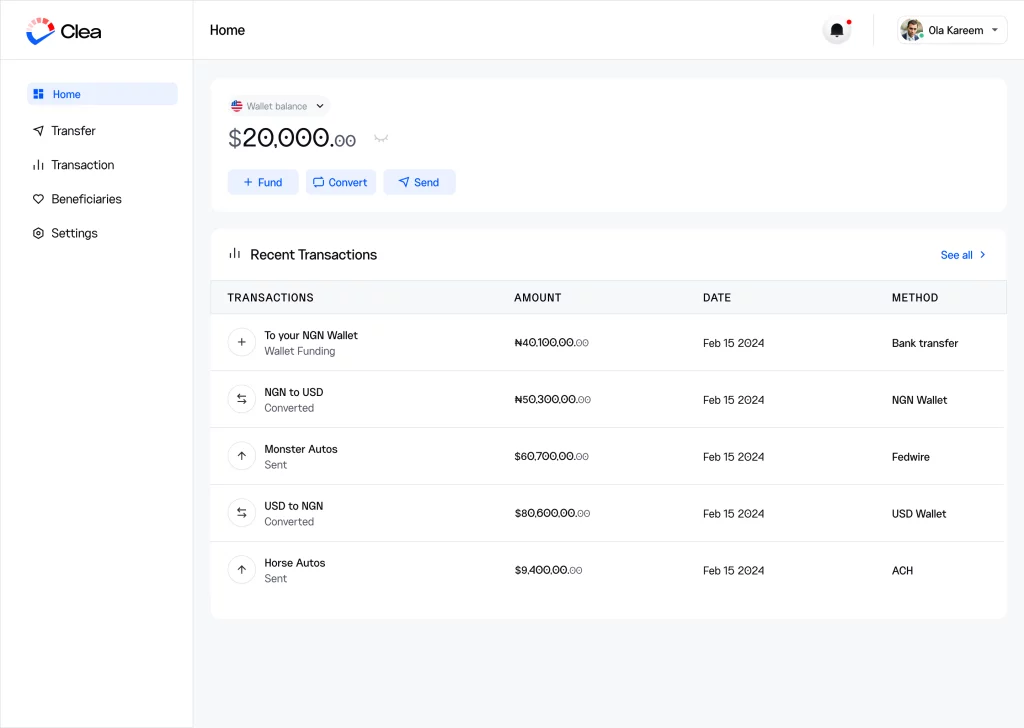
Sheriff Adedokun did not set out to build a fintech company. He set out to import cars from the United States. But when he tried to pay American auction houses from Nigeria in 2022, the transactions kept getting rejected. Fintech apps did not solve it. Banks came with forms, queues, and hard limits on international transfers. And auction platforms had a strict rule: payment had to come directly from the buyer, no third parties.
That friction pushed Adedokun to launch Autoclear in 2024, a business that helped customers source vehicles and handle payments to US auction platforms. Working closely with importers, he quickly saw that the payment headache did not stop at the auction house. Shipping companies, freight forwarders, and customs brokers all had their own payment requirements, their own processes, their own hoops to jump through. The problem was bigger than cars.
So Adedokun called his longtime friend Sidney Egwuatu, and together they built Clea, a cross-border payments platform designed specifically for African businesses paying overseas suppliers. The two developed the product quietly before going public in December 2025. The timing makes sense when you consider the scale of the market: Nigeria's total imports crossed 15 billion naira, roughly 11.1 million dollars, in just the first quarter of 2025 alone, according to National Bureau of Statistics data.
Clea lets businesses fund an account in naira, convert to the currency they need, and pay overseas suppliers from one platform. A live product demo showed support for US dollars, British pounds, euros, and Chinese yuan. Importers who once juggled banks, apps, and failed transactions can now manage it all in one place. The question now is how many of Nigeria's suppliers are ready to leave the old process behind.
Originally published by TechCabal.