
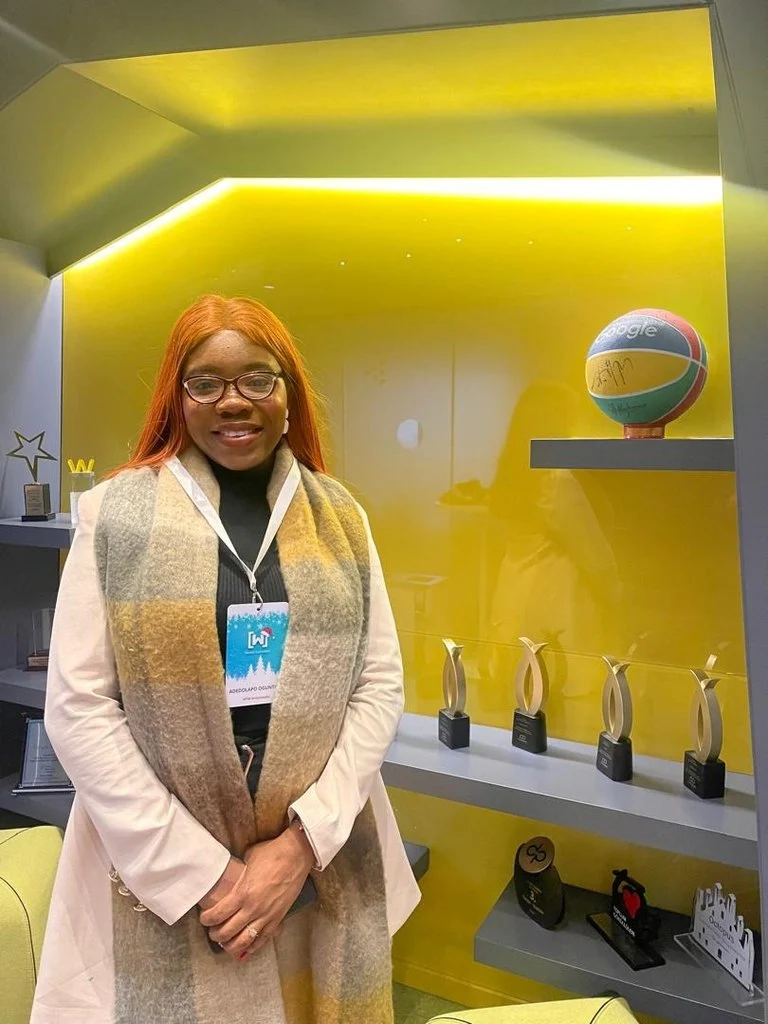
A missing ramp at a Lagos bank conference stopped Adedolapo Oguntayo-Williams in her tracks. It was 2024, and she had arrived pushing her daughter in a stroller, only to find no accessible pathway at an event hosted by one of Nigeria's leading commercial banks. For an industrial engineer trained to scrutinise operational problems and understand who they affect, the oversight was impossible to ignore. "If a leading financial institution could overlook something as fundamental as an accessible pathway, what would the situation be like in many other public spaces?" she remembers thinking.
The experience sent her looking at physical and digital accessibility everywhere she went, and what she found was consistent: persons with disabilities were largely overlooked. She had already built a career that refused to stay in one lane, from childhood dreams of the cockpit to washing dishes in Cyprus on a state scholarship, negotiating vendor contracts for Ruff 'n' Tumble, and running global cybersecurity compliance remotely from Abule Egba, Lagos. That range gave her an enterprise playbook she was now ready to use differently.
Her answer was the LearnArk Inclusion Academy, a free technology training programme for deaf, blind, and physically impaired learners, offered through her edtech platform, LearnArk. The goal is direct: move overlooked talent from the margins into high-value tech roles. "Inclusion had to go beyond conversations and good intentions," she tells TechCabal. "It had to translate into access, opportunities, and the ability for people to build independent lives."
She is clear-eyed about the limits of what one person can fix. "I knew I could not solve Nigeria's wider accessibility challenges on my own, but I could contribute in an area I understood: education and technology." For a woman who once wanted to become a pilot precisely because so few women were in the cockpit, building digital ramps for Africa's most overlooked talent is very much in character.
Originally published by TechCabal.