
Dare Oluwayanmife Adeola did not arrive at the University of Lagos the traditional way. He entered his second-year Urban and Regional Planning class through JUPEB, an intensive foundation programme that forced him to build a disciplined personal schedule while running a commercial hustle on the side. That experience put something in sharp focus for him. Too many of his classmates were either sacrificing their grades to survive financially or burning out socially to stay on top of their studies. "University is supposed to be a total experience," he told TechCabal. "You shouldn't have to compromise your degree to fund your life, or vice versa."
In 2023, Adeola partnered with Olamide Onigbanjo, then a Chemical Engineering undergraduate at UNILAG, to build UniBeta. The original idea was sweeping: a student super-app that bundled timetable scheduling, CGPA trackers, peer tutoring, career advice, and an e-commerce marketplace where student vendors could sell thrift streetwear and perfumes, all in one place.
The reality hit hard. The outsourced mobile app arrived riddled with bugs, failed Apple App Store and Google Play reviews repeatedly, and nearly drained their savings. They also ran straight into one of Nigerian edtech's most punishing patterns: massive traffic spikes in the two weeks before exams, then complete silence the moment papers were submitted.
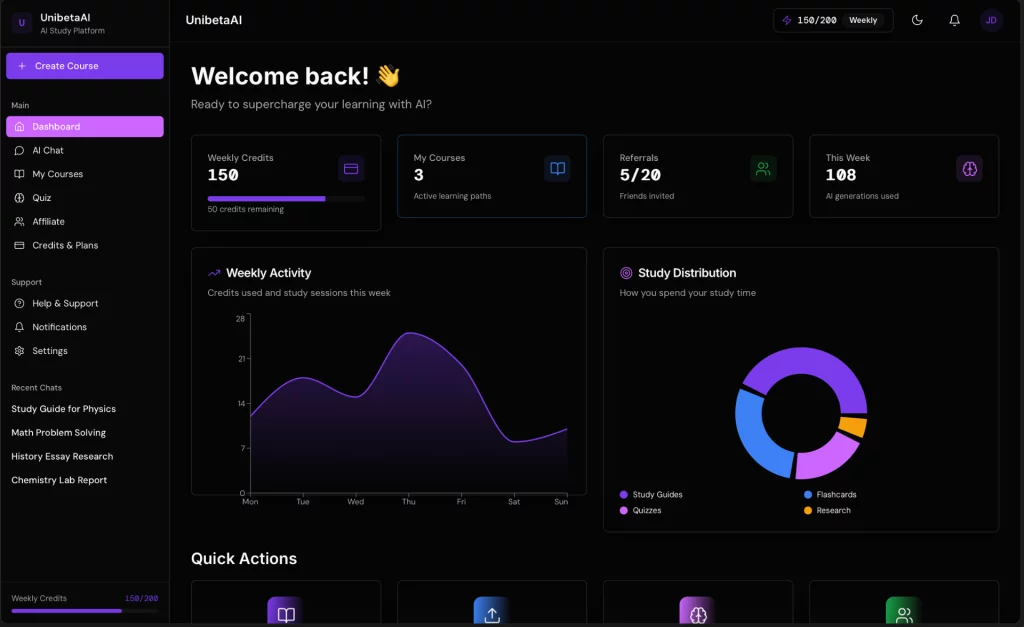
So they stripped it back. Noticing that global tools like ChatGPT struggle to make sense of photocopied course packs and Nigeria's idiosyncratic local syllabuses, the founders rebuilt UniBeta around a sharper idea. They trained AI to identify high-yield topic clusters from past papers, working from the insight that federal university lecturers rarely repeat questions verbatim, but they do return to the same core topics.
Three years and several false starts later, UniBeta is a targeted AI study tool built specifically for the Nigerian undergraduate experience. Whether that focus is enough to hold students' attention beyond exam season is the question worth watching.
Originally published by TechCabal.