
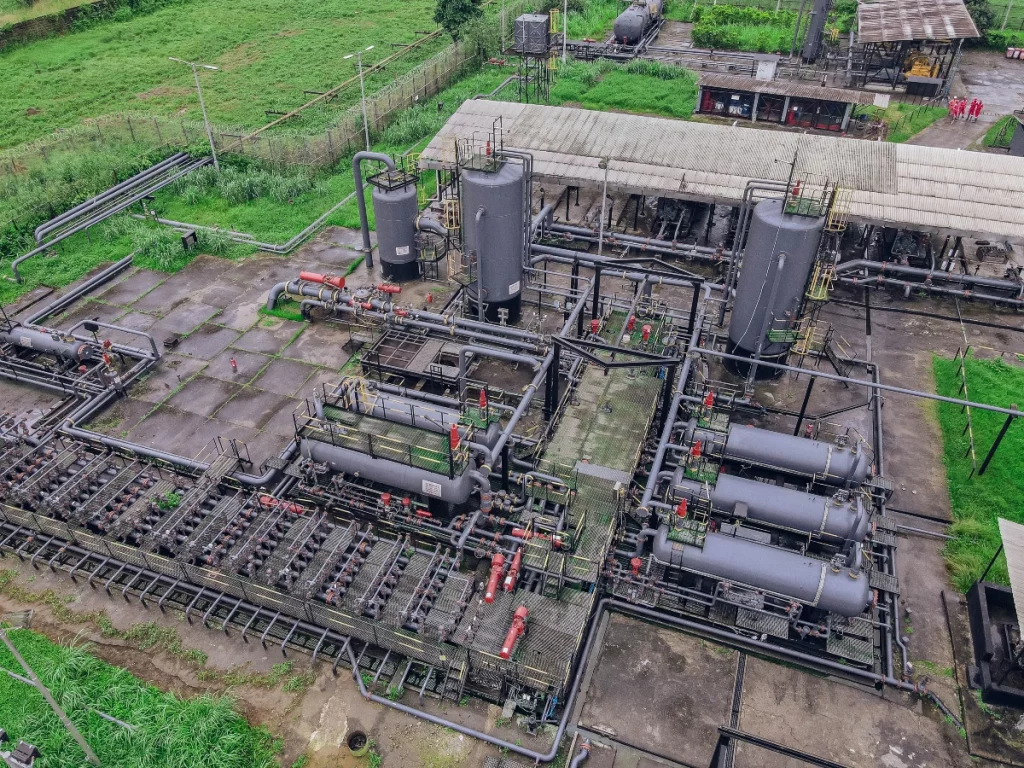
At its worst point, for every 100 barrels of oil Heirs Energies pumped into the pipeline, only 3 arrived at the export terminal. The rest vanished into Nigeria’s $3.3 billion crude theft black hole. To rescue the $1.1 billion asset, the indigenous producer built the Integrated Operations Management Centre (IOMC), a digital control layer tracking pressure drops, wellhead breaches, and flow rates in real time. But in an industry governed by physical pipelines and security risks, how far can digital technology actually take you? In this feature, FRANK ELEANYA breaks down the tech, the economics, and the hard operational realities of turning around OML 17.
When Heirs Energies took over operatorship of Oil Mining Lease (OML) 17 in 2021, it inherited a large but distressed asset in the eastern Niger Delta. The operation had ageing infrastructure, a sprawling pipeline network, persistent crude theft, and facilities increasingly surrounded by urban communities.
The company did not acquire OML 17 outright. Through TNOG Oil and Gas Limited, a Heirs Holdings and Transcorp-related vehicle, it bought the 45% stake previously held by Shell, TotalEnergies and Eni in the former SPDC joint venture for about $1.1 billion.
The Nigerian National Petroleum Company retains the remaining 55%, making OML 17 an NNPC/Heirs Energies joint venture operated by Heirs.
Originally published by TechCabal.