
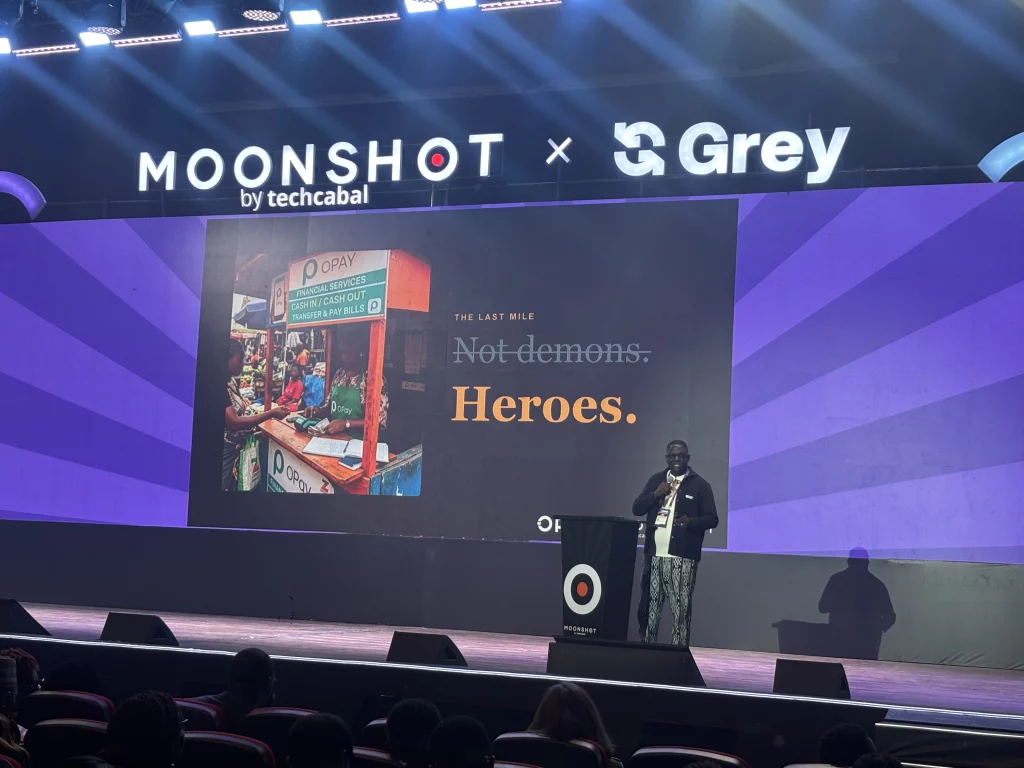
Dotun Daniel Adekunle walked onto the Moonshot by TechCabal stage on 28 October with a provocation dressed as a compliment. "Stubbornness is a business model in Africa," OPay's chief operating officer and chief technology officer told the audience in a keynote he titled "Markets That Refuse to Break." His argument was straightforward: the companies that last in Nigeria are the ones built for its worst days, not its average ones.
He had a recent example close to hand. In 2023, the naira redesign left Nigerians scrambling for cash, bank apps buckled under the surge in transfers, and payments on the NIBSS Instant Payment system jumped 45.5% in February of that year even as their total value fell 5.12%. Nigerians were moving small, everyday spending onto digital transfers because physical cash had dried up. OPay held up, Adekunle said, because of its nationwide agent network, the kind of people-on-the-ground infrastructure that no app update can replicate overnight.
That lesson sharpened again in August, when a fake notice spread online claiming OPay would shut down on 1 September and urging customers to withdraw their money. Some did. The Central Bank of Nigeria called it false, OPay denied it, and police arrested a woman on 4 September in connection with the post. Adekunle did not treat it as just a PR crisis. "When we had the issue, we had to bring the market together because it could be you the next day," he said. "Resilience cannot be achieved alone."
The business context behind his confidence is hard to ignore. On 9 October, OPay filed to list on the New York Stock Exchange. The filing reported revenue of $467.1 million in the first half of 2026, up from $197.5 million a year earlier, with lending now overtaking payments as its biggest line. Nigeria accounted for 89.5% of that revenue. Credit risk and regulation are listed among the main threats, which is partly why Adekunle told builders to stop treating regulators as opponents and start treating regulation as a design input.
He closed with three assumptions he wants founders to abandon: that they can design for an average day, that technology can substitute for people, and that a difficult market is a disadvantage. "Fragile markets don't break businesses, fragile assumptions do," he said. Then came the line the room will remember: "If you can survive Nigeria, you can survive the world." The question now is which other founders are building like they actually believe it.
Originally published by TechCabal.