
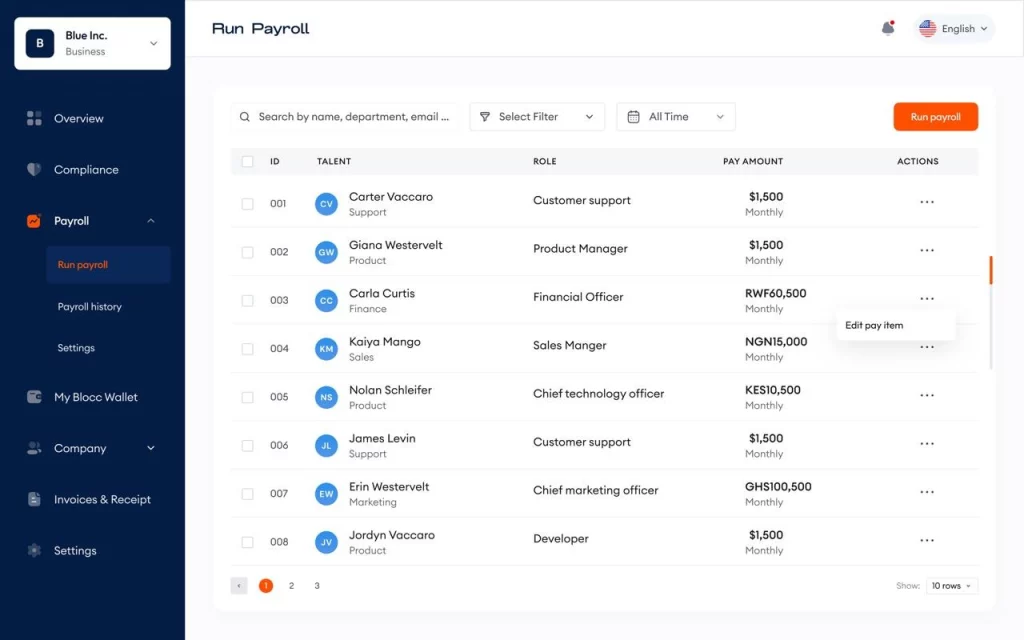
Instant crypto payouts mean very little if your bank rejects raw wallet histories as proof of income. For remote African workers earning from international clients, getting paid is only half the battle—the other half is building a verifiable paper trail for visas, rent, and banking compliance. After moving to the UAE, Jennifer Echenim found herself doing a monthly “convoluted dance” through friends, stablecoins, and P2P trades just to access her salary cleanly. That frustration led her and co-founder Ajoke Asunmonu to build Bloccpay—a chain-agnostic payroll platform that combines stablecoin settlements with bank-grade digital pay slips. In our latest feature, OPEYEMI KAREEM breaks down how Bloccpay is fixing the broken assumptions of cross-border remote work for African talent.
Anyone who has relocated internationally knows the exact moment their finances become a bureaucratic hurdle. Opening a local bank account, securing a lease, or applying for a visa requires a clear, verifiable audit trail demonstrating the source and legitimacy of income.
For remote workers in Africa earning from international clients, establishing that financial paper trail is notoriously difficult. Payouts often arrive via third-party intermediaries, remittance platforms, or informal channels, leaving workers with opaque transaction histories that fail to satisfy traditional banking compliance.
Jennifer Echenim encountered this friction firsthand after relocating from Nigeria to the United Arab Emirates (UAE) while working remotely for international firms. One payment platform provided verifiable proof of earnings but suffered from sluggish processing times and uncompetitive FX conversion rates. Conversely, a popular cryptocurrency exchange offered instant settlement but produced raw wallet ledger histories that UAE commercial banks flatly rejected as proof of income.
Originally published by TechCabal.