
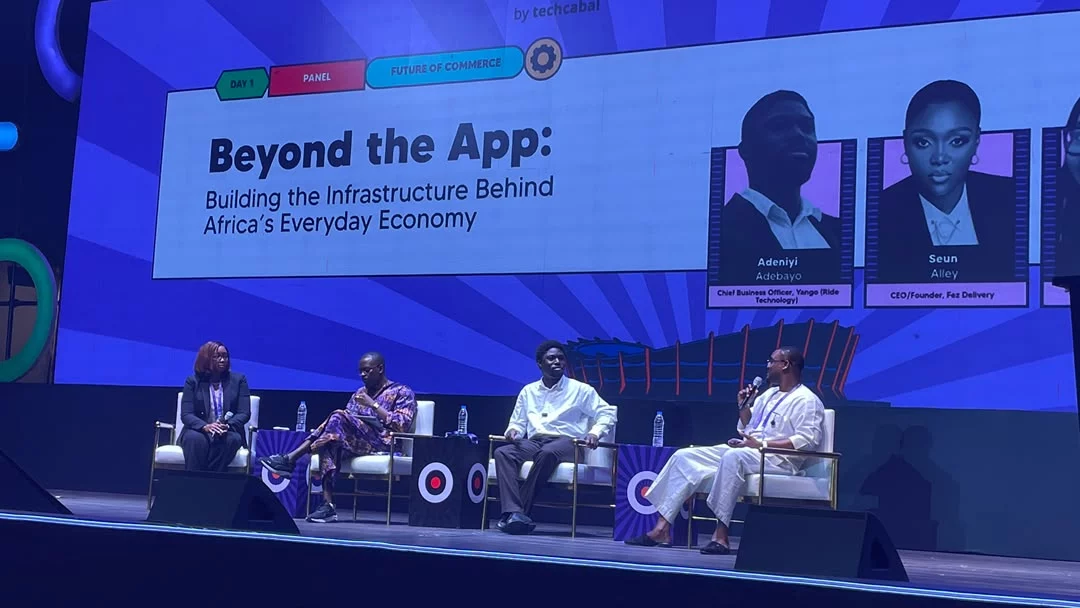
At the "Beyond the App: Building the Infrastructure Behind Africa's Everyday Economy" panel at Moonshot by TechCabal 2026, one line captured the mood of the whole conversation. "The app is just the front-end," said Sanusi Adedamola, chief operating officer at Fez Delivery. Behind every seamless delivery or ride-hail booking is a web of vehicles, location data, power supply, and financing that either holds the experience together or quietly pulls it apart.
The panel zeroed in on the real friction points for companies operating in ride-hailing, delivery, and electric mobility. Unreliable power, patchy connectivity, fragmented logistics, and disconnected cross-border payment systems all drive up operating costs and make expansion into new markets harder than it looks from the outside. Lagos, Nigeria's biggest commercial and tech hub, still deals with uneven internet connectivity, which is a sobering reminder that a strong appetite for digital services does not automatically come with the infrastructure to support them.
Financing is its own puzzle. Chinwe Adighiogu, Senior Vice President of Products at MAX, one of Africa's leading eco-friendly electric vehicle companies, spoke to how operational data, rider activity, daily earnings, battery use, maintenance costs, can help determine whether a vehicle asset is financially viable for a commercial rider. That same data, he noted, can give lenders a window into borrowers who have no conventional banking history to speak of.
The question of who pays for foundational infrastructure came up sharply during the discussion. Mapping streets and neighborhoods is expensive work, but the data it produces can serve many businesses at once. Shared charging stations and battery-swapping networks could offer electric mobility operators a smarter alternative to building separate, isolated systems. A 2024 World Bank study published in The World Bank Economic Review backs the logic: investment in roads and electricity measurably boosts activity across Africa's manufacturing and services sectors.
The infrastructure gap is not new, but the companies trying to close it are increasingly clear-eyed about what the app alone cannot fix. The real competition may not be between platforms at all. It may be between the ecosystems that can hold them up.
Originally published by TechCabal.