
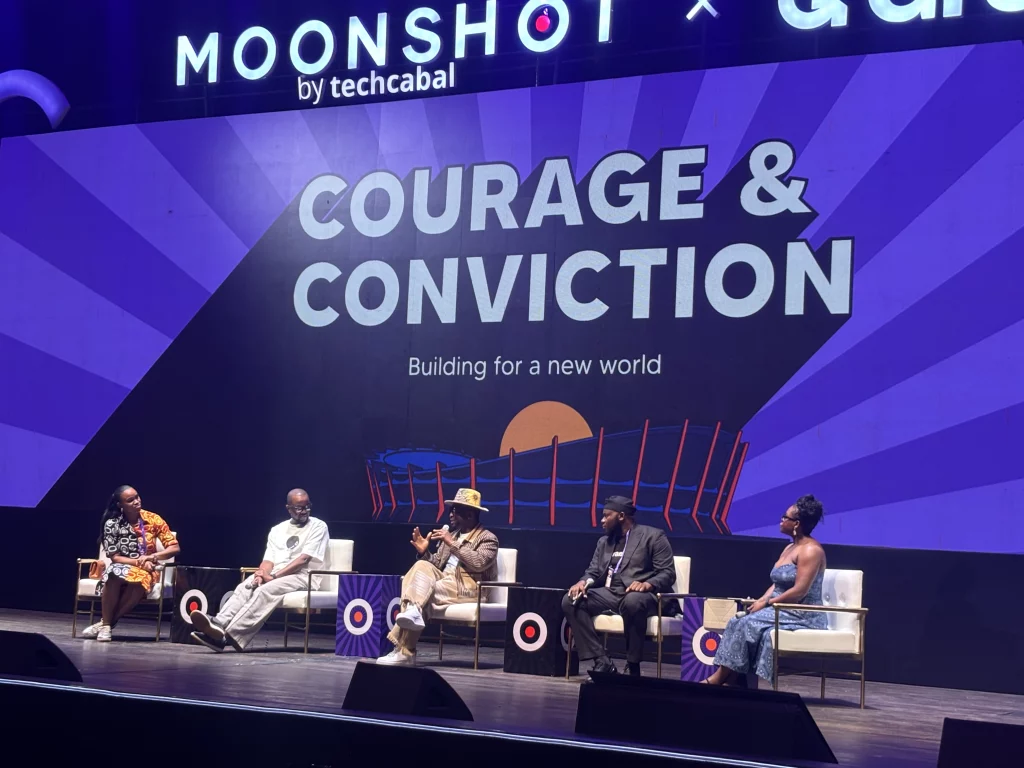
Richard Oyome, Kene Okwuosa, Darey Art Alade, and Kopano Cowen sat on a panel at Moonshot by TechCabal last Thursday, and the conversation they had is one the African creative industry has been circling for years. The question on the table: can African players build the infrastructure creators actually need? The answer, as it turned out, was complicated.
The numbers tell part of the story. According to the Nigerian Creator Economy Report 2025, 56.45% of Nigerian creators earn less than $100 a month from their work. Only 3.23% cross the $5,000 mark. And yet, Nigerian artists received more than 58 billion naira from Spotify in 2024, a 146% jump from the previous year. The money exists. It is just not reaching most people.
Brand deals were long the only real income route for many creators, because major platforms simply did not pay Nigerian creators directly. That began to shift when Meta switched on ads for Reels in Nigeria and Ghana in 2024. Cross-border payment has been another wall. Raenest, which gives freelancers and creators access to dollar, pound, and euro accounts, raised an $11 million Series A in February 2025 and has processed more than $1 billion in payments for over 700,000 individual customers. Oyome put it plainly at the session: "We need to make the market bigger."
Okwuosa pushed back on the idea that Nigeria's market is inherently too small to sustain creators. "I don't subscribe to the notion that the Nigerian market is small," he said. "It only feels that way because we haven't activated its size." His bigger concern is piracy, which he described as something that "limits the rewards and reach for creators." MultiChoice has estimated Nollywood's annual piracy losses at between 10 billion and 15 billion naira, though other industry figures run much higher and the inconsistency itself signals how little is properly measured.
Meanwhile, Netflix and Amazon Prime have both cut African content spending, according to TechCabal's 2026 outlook, pushing more Nollywood filmmakers toward YouTube. Whether that platform shift becomes a creative opportunity or a financial squeeze depends largely on the infrastructure question this panel raised. And from the sound of it, no one has fully solved it yet.
Originally published by TechCabal.