
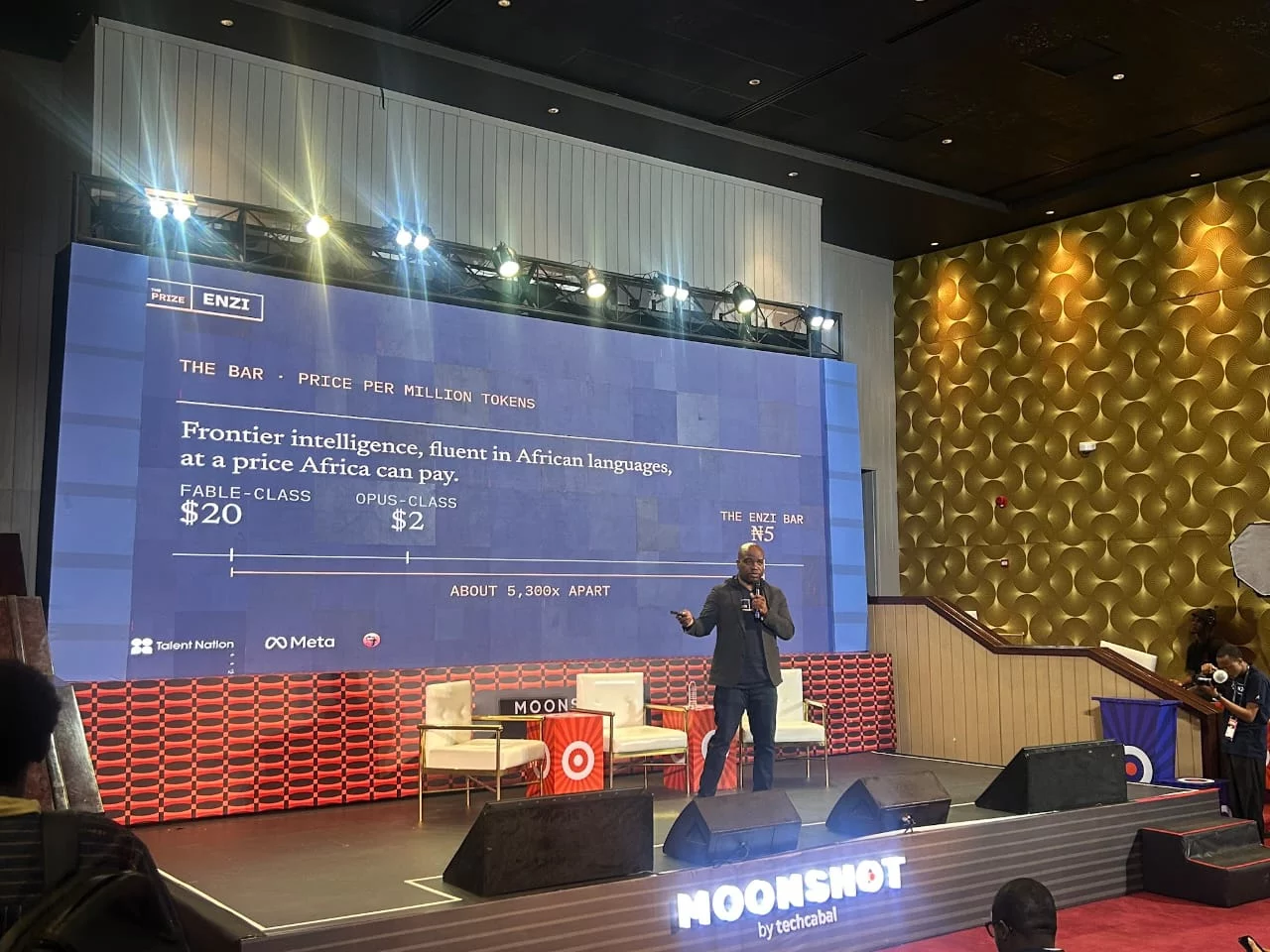
Oji Udezue has a clear message: Africa cannot fully benefit from artificial intelligence if most people and businesses cannot afford to use it. Speaking at Moonshot by TechCabal in Lagos, the Enzi president pointed to inference costs as the critical pressure point. Inference is the process by which an AI model actually generates a response or completes a task, and every single interaction carries a price tag.
That recurring cost is the problem. A business using AI to handle customer queries pays each time the system responds. At low volumes that might be manageable, but scale it up across a full working day or thousands of customers, and the economics can quickly kill an otherwise promising idea. Udezue's framing shifts the conversation away from who is building the most powerful models and toward who can make those models practical to run.
"Our goal is to make AI cheaper for Africa and America," he said. "The future of AI really goes through inference." He also flagged the gap between current usage costs and what many Africans actually earn, making the point that access to a tool is meaningless if consistent use is out of reach financially.
Cost is not the only hurdle. The World Bank's Digital Progress and Trends Report 2025 identifies connectivity, computing resources, locally relevant data, and digital skills as the foundations any country needs to genuinely adopt AI. Affordability matters, but it sits inside a larger infrastructure puzzle.
And then there is the question of fit. A cheaper service still falls short if it cannot handle local languages or respond in ways that actually make sense to the people using it. Lower prices open the door. What happens inside the room is a separate challenge entirely.
Originally published by TechCabal.