
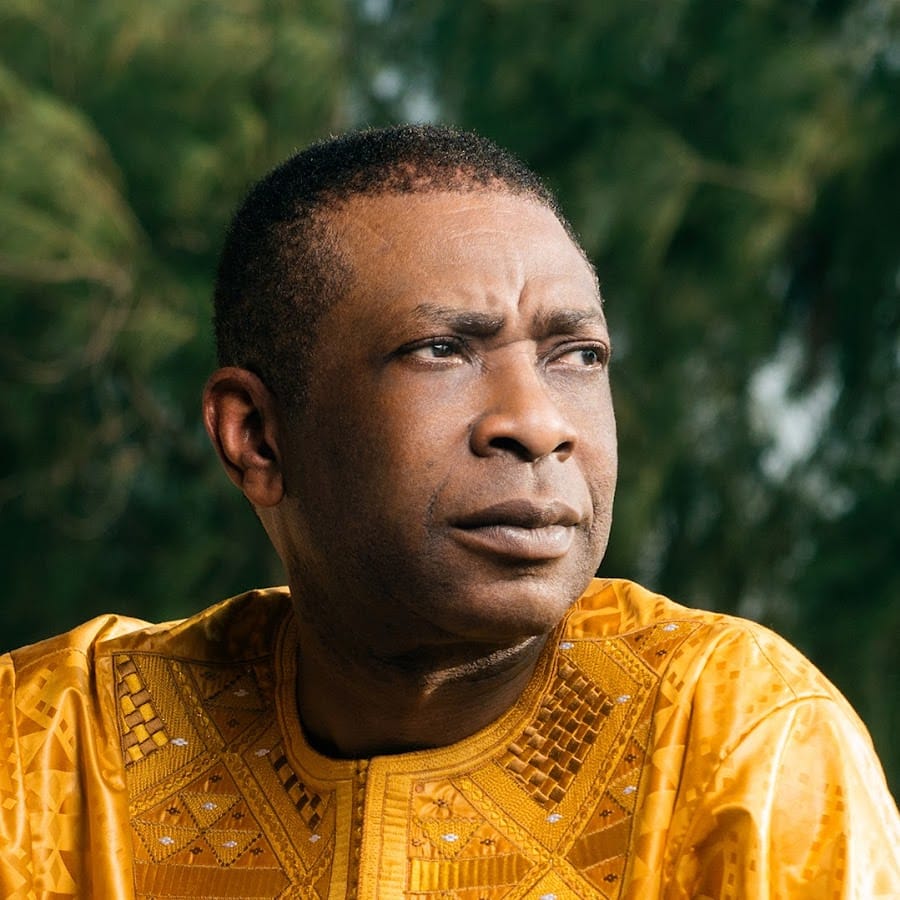
Youssou N’Dour is one of Africa’s most important musicians, and his story is about far more than songs. Born in Dakar in 1959, he grew up in the griot tradition and built a career around mbalax, the Senegalese style that became his signature sound. His music turned local rhythms into something global without losing its roots, and that balance is a big part of why his name carries so much weight across the continent and beyond.
He first rose to prominence with Etoile de Dakar and later Super Etoile de Dakar, but his solo career is what made him an international name. The 1994 album The Guide (Wommat), especially “7 Seconds” with Neneh Cherry, pushed him onto the world stage and showed how easily he could move between Senegalese tradition and global pop. Later, Egypt showed another side of him, blending music, faith and identity in a way that earned him a Grammy and deepened his reputation as an artist with real range. More on his background and career can be found at Real World Records.
What makes N’Dour stand out is how naturally he moves between music and public life. He has used his platform for activism, spoken out on social issues and even entered Senegalese politics, running for president in 2012 before later serving in government. That made him more than a performer; it made him a public figure with influence far beyond the stage, and someone whose career has always carried a sense of purpose as well as performance.
His political and public profile is also reflected by the Polar Music Prize, which recognizes his influence as both an artist and a cultural figure. N’Dour’s work has consistently shown that music can carry identity, memory and political meaning at the same time, and that is part of what makes him such a towering presence in African music. He represents a kind of artistry that is rooted, ambitious and unafraid to speak to the wider world.
Even now, Youssou N’Dour remains a symbol of what African music can be when it is deeply rooted and globally ambitious at the same time. His voice, his catalog and his public role have made him a bridge between Senegal and the wider world, and his career continues to stand as proof that local culture can travel without losing its power. That’s why his name still carries so much weight decades into his career.