
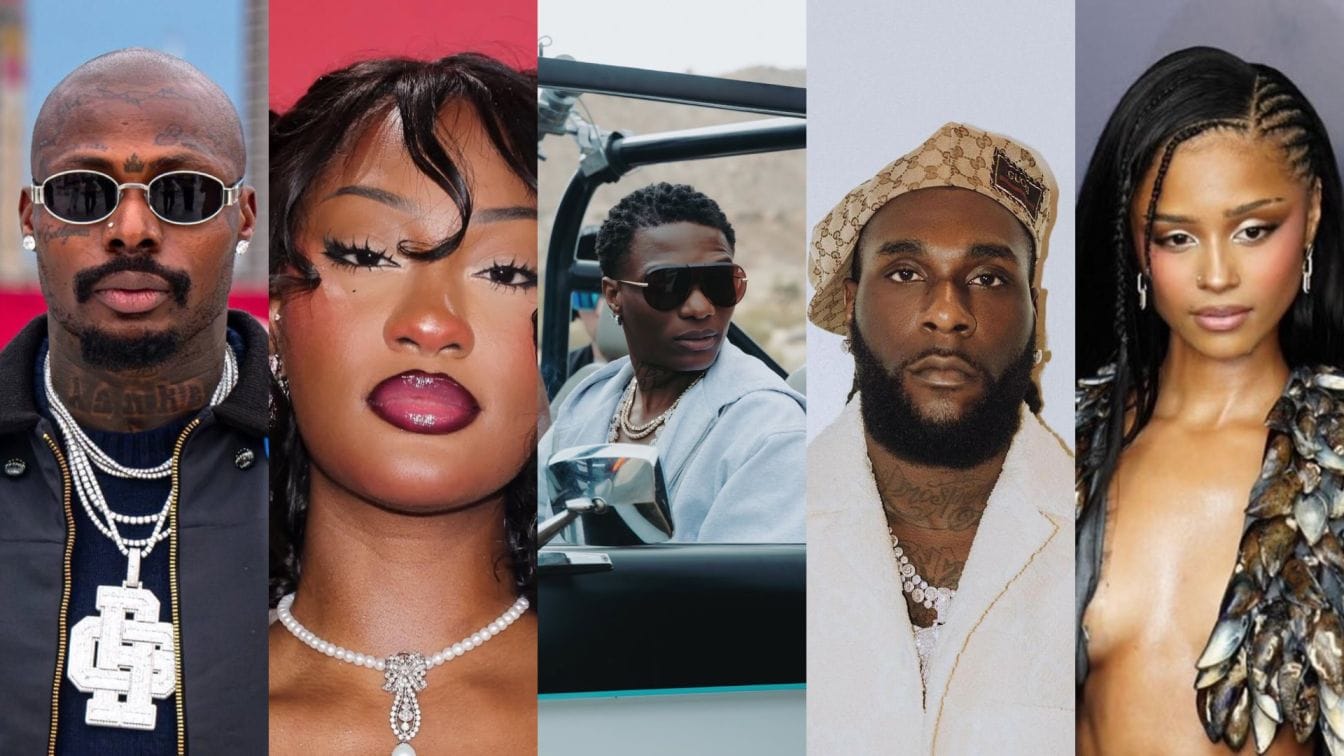
The landscape of African music on Spotify is currently defined by a mix of legacy superstars and a new wave of global hitmakers who have turned continental sounds into massive streaming numbers. As of mid-2026, the hierarchy is shifting, with monthly listener counts revealing a tight race at the top where fresh releases and viral moments can quickly reshuffle the order of the continent’s biggest names.
Burna Boy leads the pack with approximately 47.4 million monthly listeners, solidifying his position as the most listened-to African artist on the platform right now. His consistent output and high-profile international collaborations have kept his audience engaged, allowing him to maintain a significant lead over his peers. here
Tems follows in second place with around 39.5 million monthly listeners, a figure that underscores her massive global appeal and the strength of her unique vocal style. Tyla sits close behind in third with 32.2 million listeners, driven by the enduring success of her breakout hits and her ability to cross over into mainstream pop markets. Wizkid rounds out the top tier with 17.4 million monthly listeners, while Asake holds a strong position with 8.5 million, reflecting his dominance in the street-hop and Afrobeats lanes.
These numbers highlight how the streaming landscape is no longer just about cumulative career totals but about current momentum and active engagement. While Wizkid and Burna Boy have the highest all-time stream counts, the monthly listener data shows that Tems and Tyla are currently capturing more immediate attention from the global audience. here
For the African diaspora, seeing these artists dominate global charts is more than just a win for music; it is a profound moment of cultural validation and pride. It means that parents can play Burna Boy or Tems at gatherings in London, New York, or Toronto without needing to explain the sound, knowing that their children’s heritage is now central to the global conversation.
This level of recognition outside their home regions signals that African stories, accents, and rhythms are no longer niche but are defining the mainstream, giving a generation of diaspora kids a shared language and identity that connects them back to the continent.