
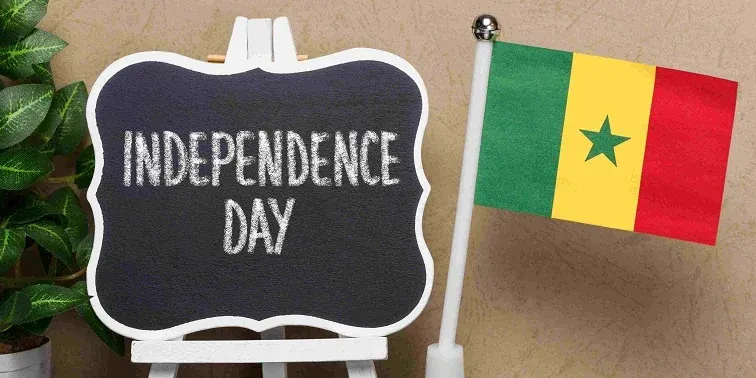
Senegal marks its Independence Day every year on April 4, a date that honors the 1960 transfer‑of‑power agreement that set the country on a clear path away from French colonial rule. Although full sovereignty crystallized later that year, April 4 is recognised as the official national day because it commemorates the signing of key accords between French authorities and Senegalese leaders that dismantled the old colonial framework.
The road to that moment ran through the short‑lived Mali Federation, created in 1959 when Senegal and French Sudan joined together as a semi‑autonomous state within the former French West Africa. Political tensions and competing visions for the future meant the federation quickly fractured, and by August 1960 Senegal had asserted itself as a separate republic, with poet‑philosopher Léopold Sédar Senghor installed as its first president and key architect of its cultural and political identity. You can read a concise historical overview of how Senegal moved from colony to independent republic in this archive piece here.
On the ground, Independence Day is a mix of military pageantry and cultural celebration. In Dakar, officials preside over a major parade featuring the armed forces, student brigades and civic groups, while the national flag—green, yellow and red with a green star—is hoisted across public buildings and squares. Away from the official ceremonies, neighborhoods celebrate with mbalax music, community parties, fireworks and shared plates of national dishes like thieboudienne, turning the holiday into a showcase of Senegalese pride at home and in the diaspora.
Sixty‑plus years on, April 4 still carries real symbolic weight. Commentators frequently point to Senegal’s relatively stable multi‑party democracy, peaceful transfers of power and strong civil society as part of the legacy of that independence struggle, even as the country continues to wrestle with economic pressures and regional insecurity.
For many Senegalese, both in cities like Dakar, Saint‑Louis and Touba and in communities abroad, the day is a yearly reminder to honor veterans of the anti‑colonial movement and pass stories of resilience and sovereignty to younger generations, a sentiment echoed in recent Independence Day reflections shared across media and social platforms. You can explore more detailed facts and contemporary perspectives on the holiday here.