
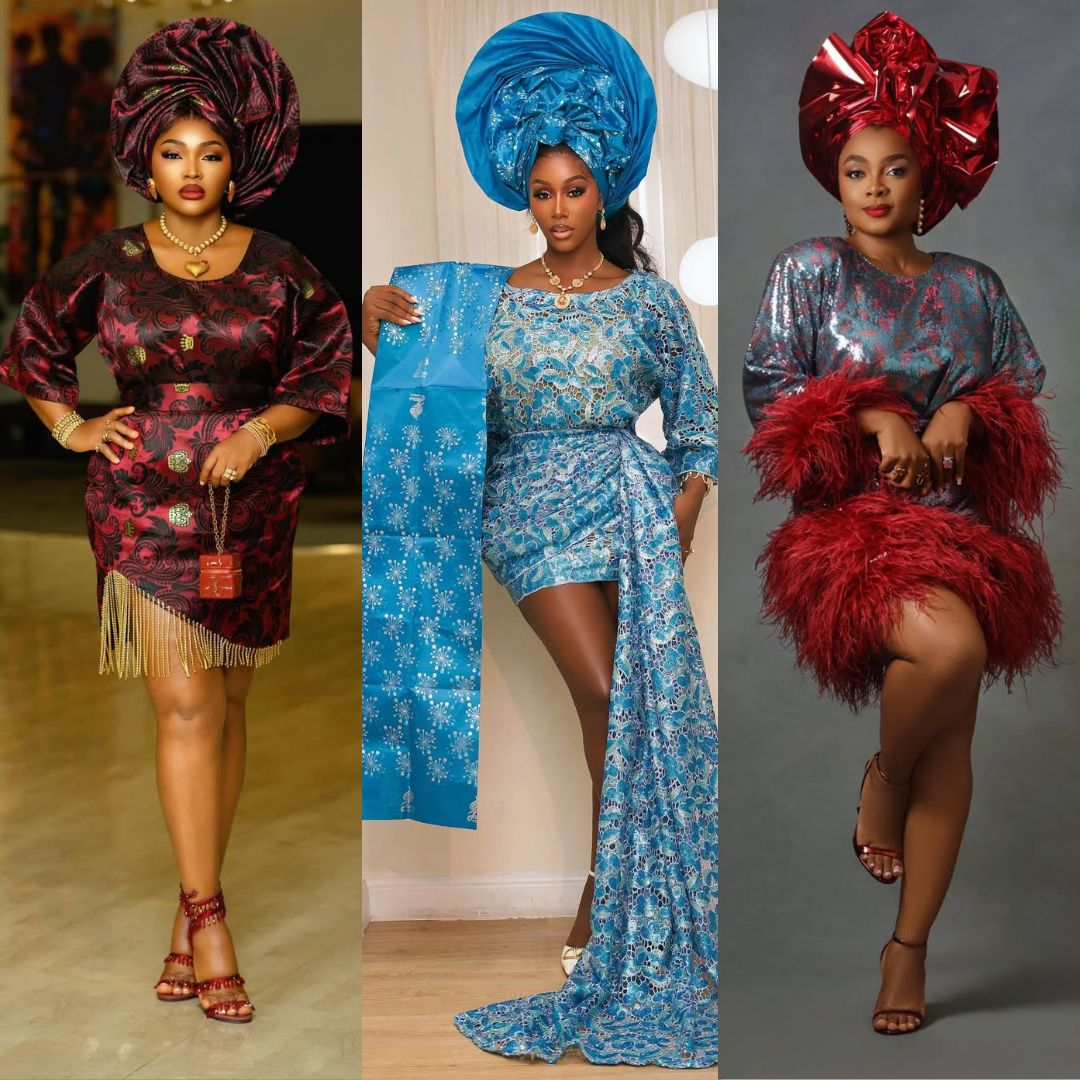
Bimbo Akintola showed up in a shimmering blue and pink sequinned Oleku by Wanni Fuga, with dense crimson feather trims running along the sleeves and hemline. Mercy Aigbe leaned into rich, formal elegance in a burgundy brocade look, while Nelly Mbonu brought a softer drama in a blue lace gown with a train. These are not small style moments. These are women making a very deliberate point about where Nigerian fashion stands right now.
The Oleku has been doing this since the 1960s and 1970s, when a shorter, lighter take on the classic Yoruba ìró and bùbá first caught on as something youthful and a little rebellious. The short wrapper, tied at the waist and landing around the knee, traded some of the formality of traditional ceremonial dressing for something easier to move in and easier to own. The silhouette stayed elegant. The attitude got looser.
What keeps it alive is how completely it resists being finished. Designers keep finding new entry points: rich lace, embellished brocades, structured tailoring, unexpected colour pairings. Toolz Oniru-Demuren styled hers in a gold and black leopard-print set, paired with a glossy black leather gele and futuristic gold sunglasses, photographed beside a vintage car. The gele alone did significant work, but the sunglasses made it a whole conversation.
The styling language around Oleku has become its own art form. A layered gele lifts the entire silhouette. Strappy heels and minimal jewellery let the fabric speak. Every interpretation feels rooted in something familiar, but the execution keeps shifting just enough to feel current. That gap between heritage and reinvention is exactly where Oleku lives, and clearly, it has no plans to move.
Originally published by Bella Naija.