
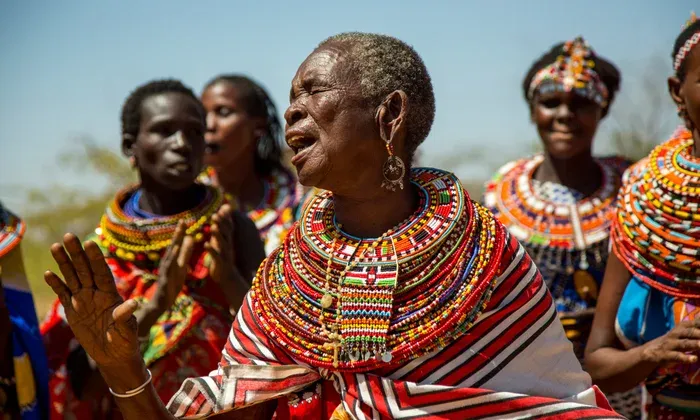
For more than 30 years, the village of Umoja in northern Kenya has been a place where women live without men and rewrite the rules that once kept them silent. Founded in 1990 in Samburu County by activist Rebecca Lolosoli and 14 other women, the settlement was created as a refuge for survivors of rape by British soldiers, domestic violence, female genital mutilation (FGM) and forced marriage.
They chose the name “Umoja,” meaning “unity” in Swahili, and set one clear rule: men are not allowed to live there, only women and their children. You can read a detailed overview of Umoja and how it works as a women‑only community here.
Life in Umoja looks like many rural Samburu villages at first glance—round huts made of mud and dung, a ring of thorn branches forming a fence, goats grazing nearby—but the decision‑making and money flow differently. The women run everything themselves: they elect leaders, share chores, pool a portion of their earnings and gather under a “tree of speech” to discuss problems and vote on village issues. Their income comes from selling traditional Samburu beadwork and honey to tourists, and from a small campsite and cultural centre they manage for visitors headed to the nearby Samburu National Reserve.
For many residents, arriving in Umoja is the first time they’ve felt safe. Survivors talk about being beaten for speaking out against FGM, being discarded after sexual violence, or being forced into marriages as teenagers, only to find in Umoja a place where no husband can hit them, no elder can marry off their daughters and no one can stop them owning land. One early resident told the Thomson Reuters Foundation that the village gave her “a strong support system” and a chance to send all her children—sons and daughters—to school, something that would have been unthinkable in her previous life.
The village is not without challenges. Local men have tried to undermine it—setting up rival craft markets, warning tourists away, even stealing cattle—and the COVID‑19 pandemic badly hurt their tourism income. Still, Umoja’s existence has had ripple effects far beyond its thorn fence: the women have fought for and are close to receiving formal title to grazing land, and their model has inspired conversations about land rights and gender‑based violence across rural Kenya.
Over three decades on, Umoja stands as both a sanctuary and a quiet revolution, proving that women pushed to the margins can build and run a village on their own terms. For a narrative look at how abused women find freedom there, the ABC feature on Umoja is a strong companion read here.