
Eswatini’s Umhlanga, or Reed Dance, is one of the country’s biggest cultural gatherings, where eight days of walking, singing and synchronized movement turn tradition into living pageantry. The ceremony usually takes place in late August or early September, when tens of thousands of unmarried, childless girls and young women are called from communities across the country to Ludzidzini Royal Residence, grouped into age‑regiments and prepared for the days ahead.
For most of the week, the focus is on the journey and the work. The maidens, led by senior girls and female elders, walk long distances to riverbanks and wetlands to cut tall reeds with machetes, singing as they move and arranging the reeds into towering bundles they’ll carry back on their shoulders. Back at the royal homestead, each regiment delivers its reeds to the Queen Mother—symbolically helping repair the windbreak around her residence—before peeling off in disciplined lines, already rehearsing the songs and footwork they’ll unleash in the main arena.
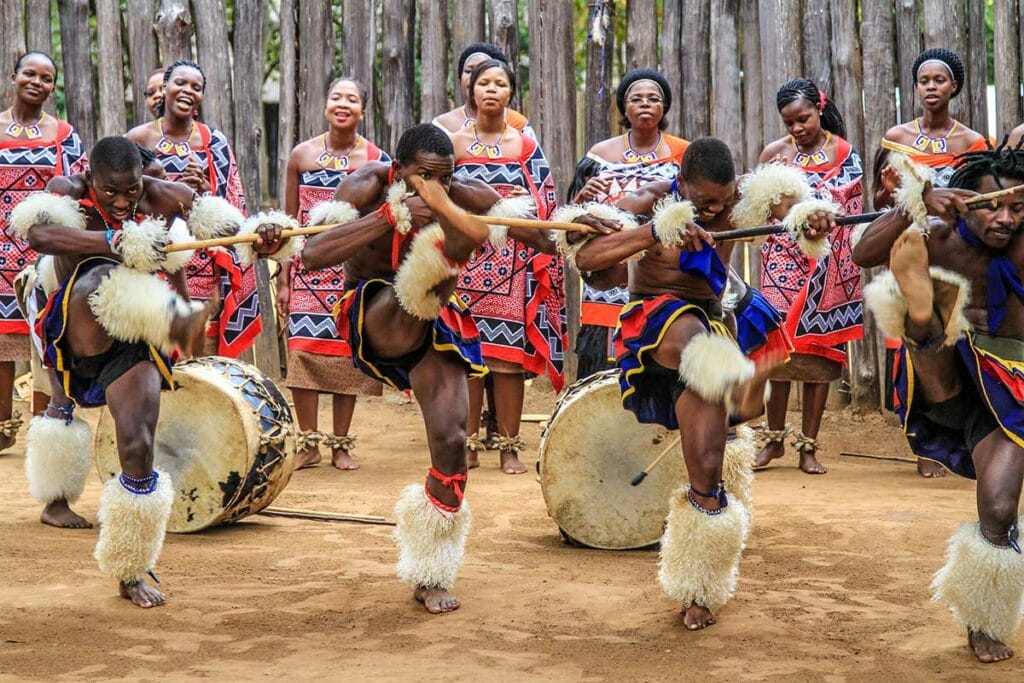
When the dancing starts in earnest on days six and seven, the scale hits you first. Columns of girls in bright sidvwaba skirts, beadwork, sashes and ankle rattles pour into the Ludzidzini arena, moving like a multicoloured wave around the royal kraal. To the beat of drums and whistles, they stamp, turn and sway in regimented formations, each group with its own song, but all locked into the same rhythm, as they file past the royal family and a mix of locals, dignitaries and tourists watching from the stands. You can get a sense of that choreography and colour from Eswatini’s official tourism breakdown of Umhlanga here.
Beneath the spectacle, the Reed Dance carries explicit social and spiritual messages. Officially, it exists to preserve girls’ chastity, provide tribute labour to the Queen Mother and build solidarity among young women, reviving the older “Umcwasho” system where girls were held collectively responsible for premarital pregnancy. In practice, it’s also a massive confidence‑building space: the maidens see themselves reflected in this sea of faces and bodies, learn protocol, songs and steps from older peers, and participate in a ritual that ties them directly to their ancestors and monarchy in a country where traditional authority still matters.
Around Umhlanga, other traditional dances help keep Eswatini’s cultural muscle strong. Warrior styles like Sibhaca—fast, high‑kicking, heavy on stamping and team formations—erupt at festivals and community gatherings, while sacred ceremonies like the Incwala “First Fruits” festival centre on the king, male regiments and tightly controlled, spiritually charged dances at the royal cattle byre. Together, these forms make dance less of an occasional performance and more of a social language, one that encodes respect, identity and memory in bodies that move in time. A recent feature on Eswatini’s dance culture and its role in preserving the country’s spirit dives deeper into that idea here.