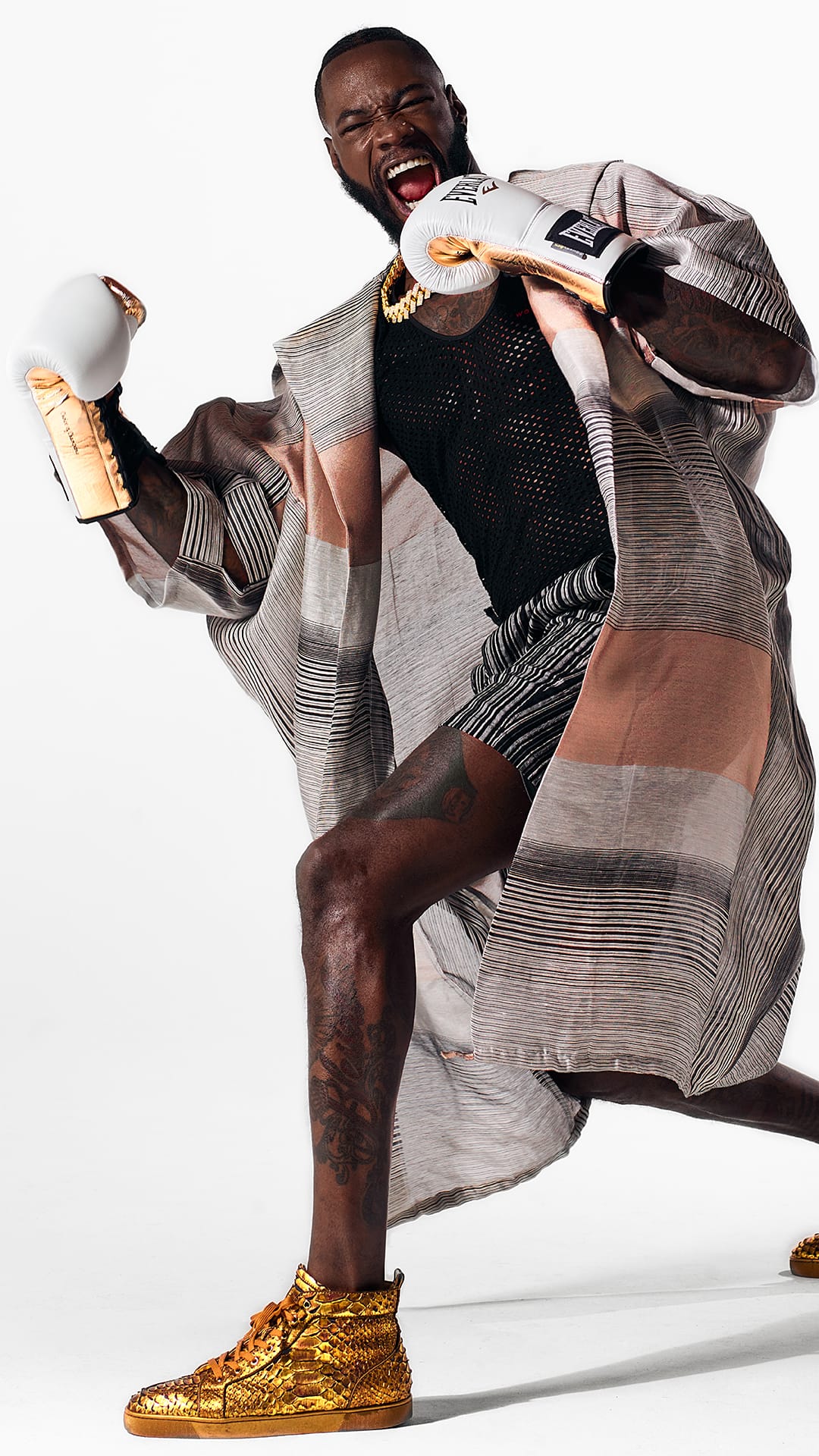
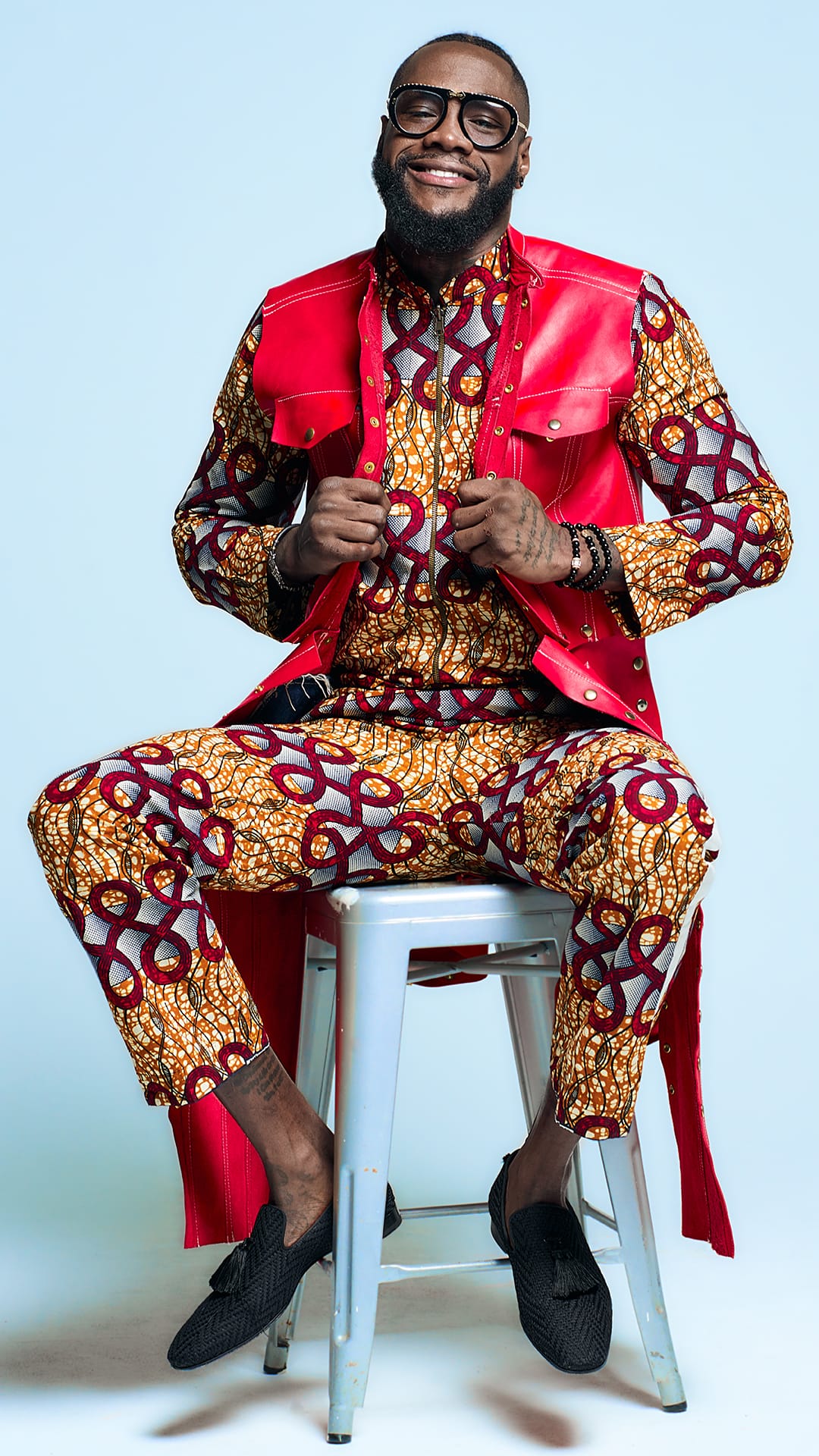
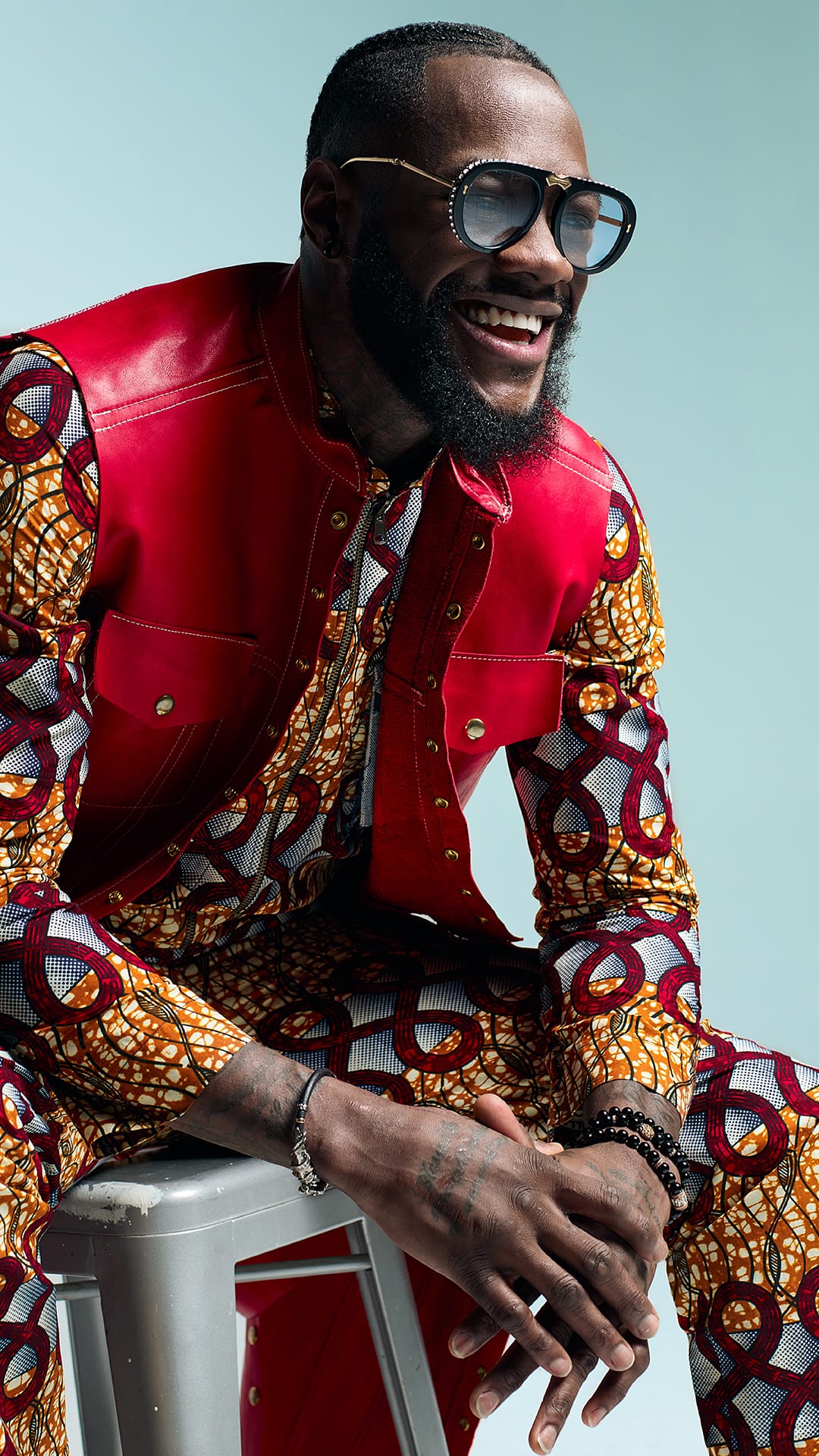
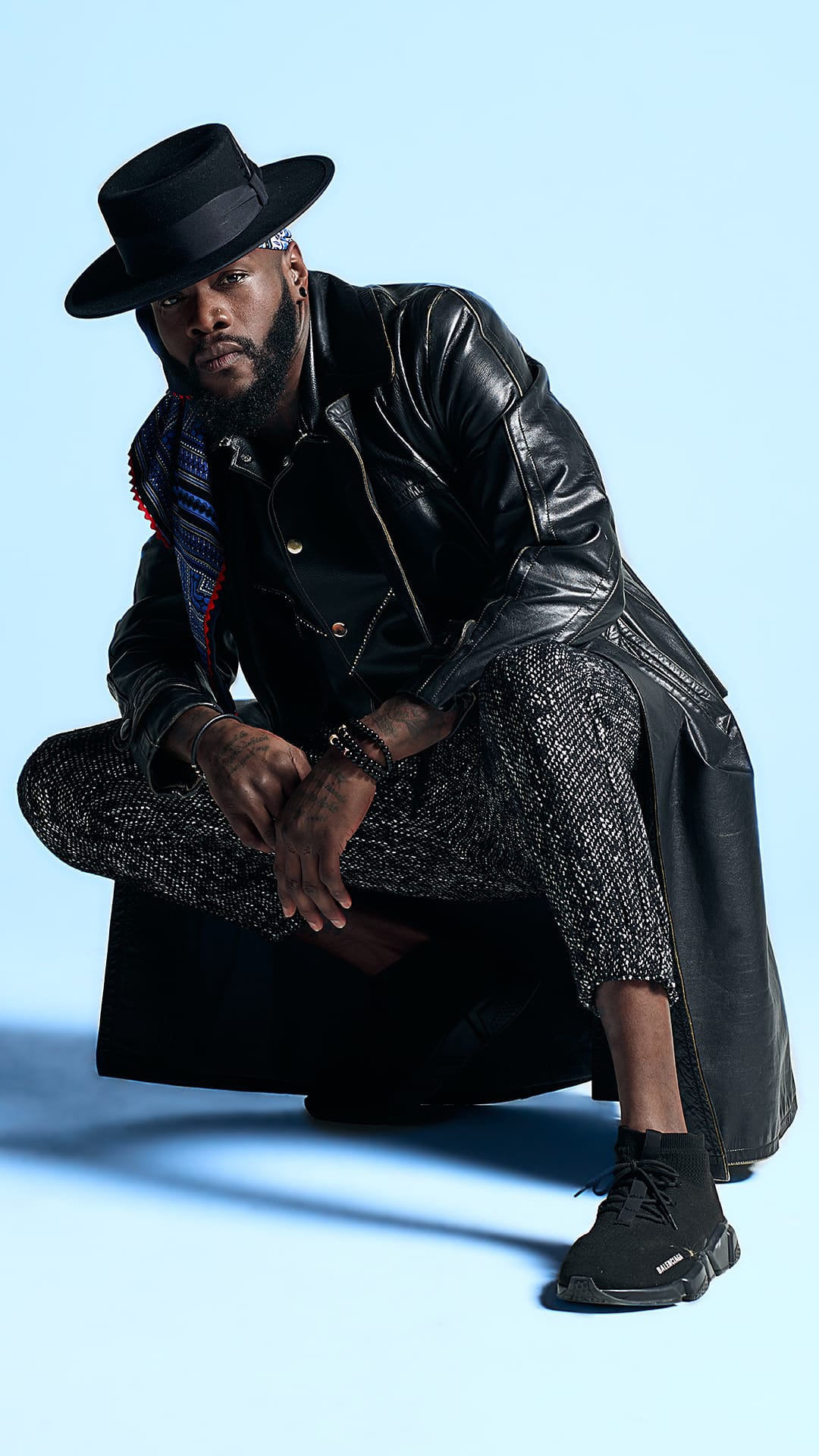
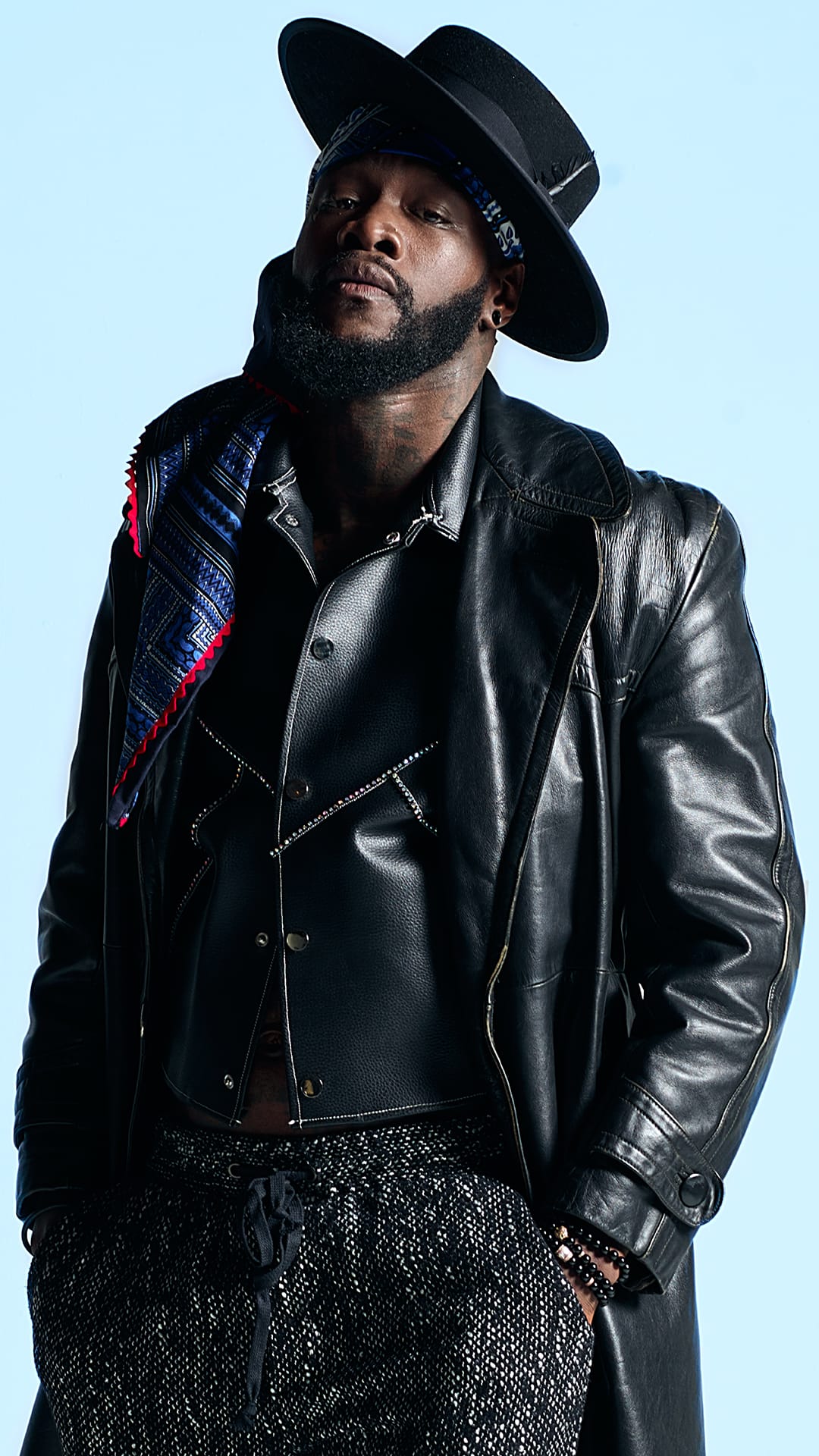
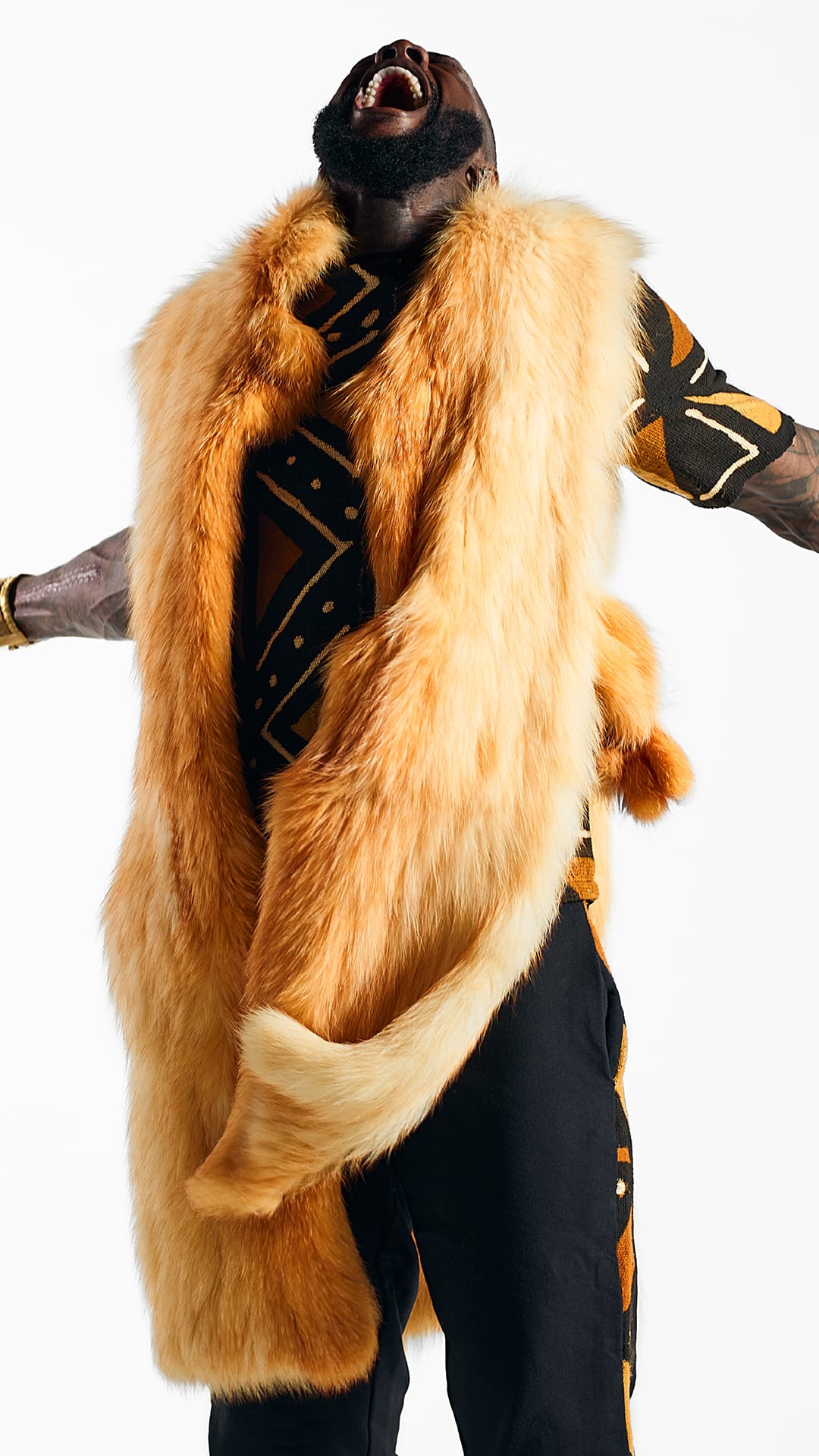
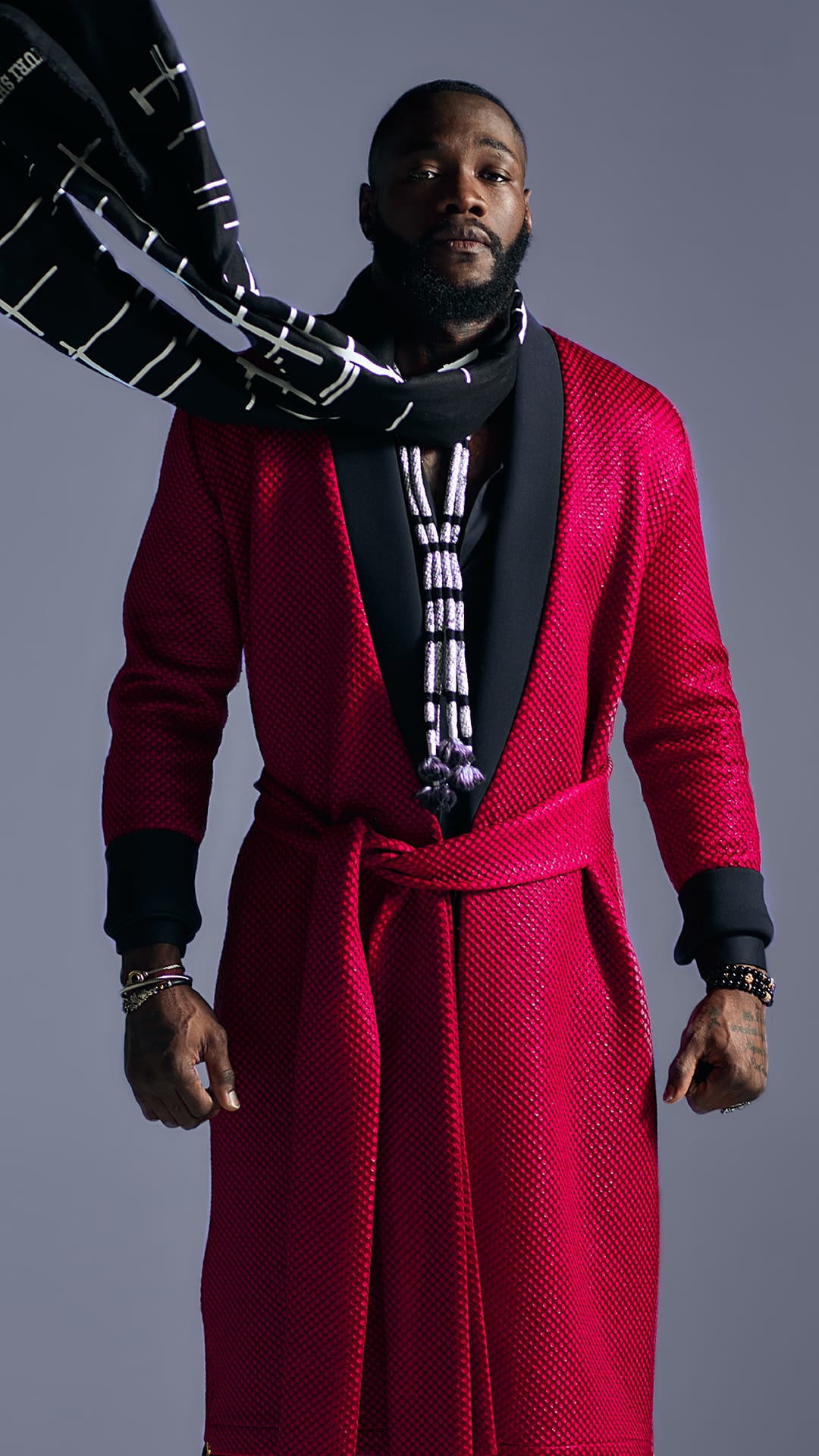
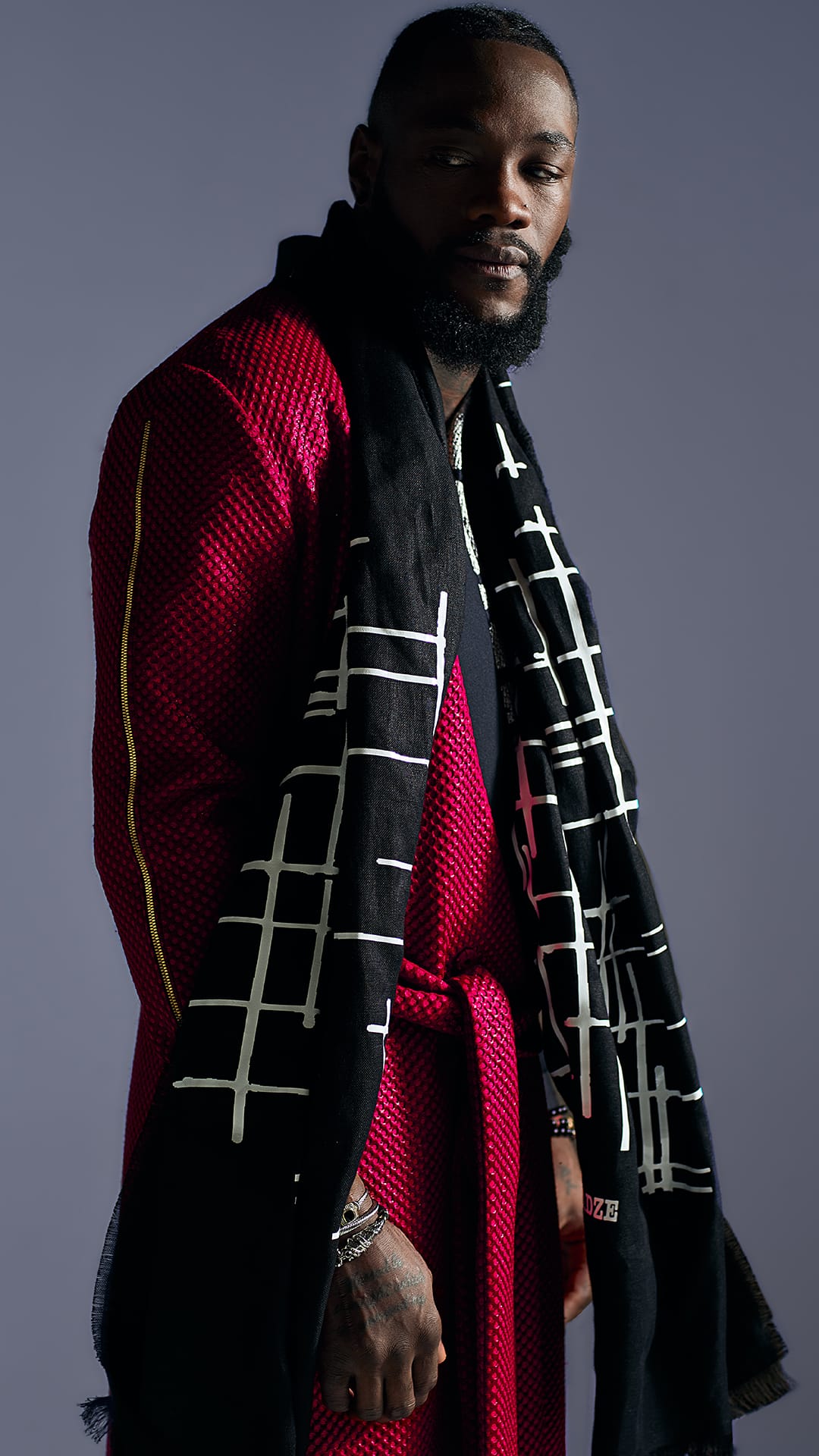
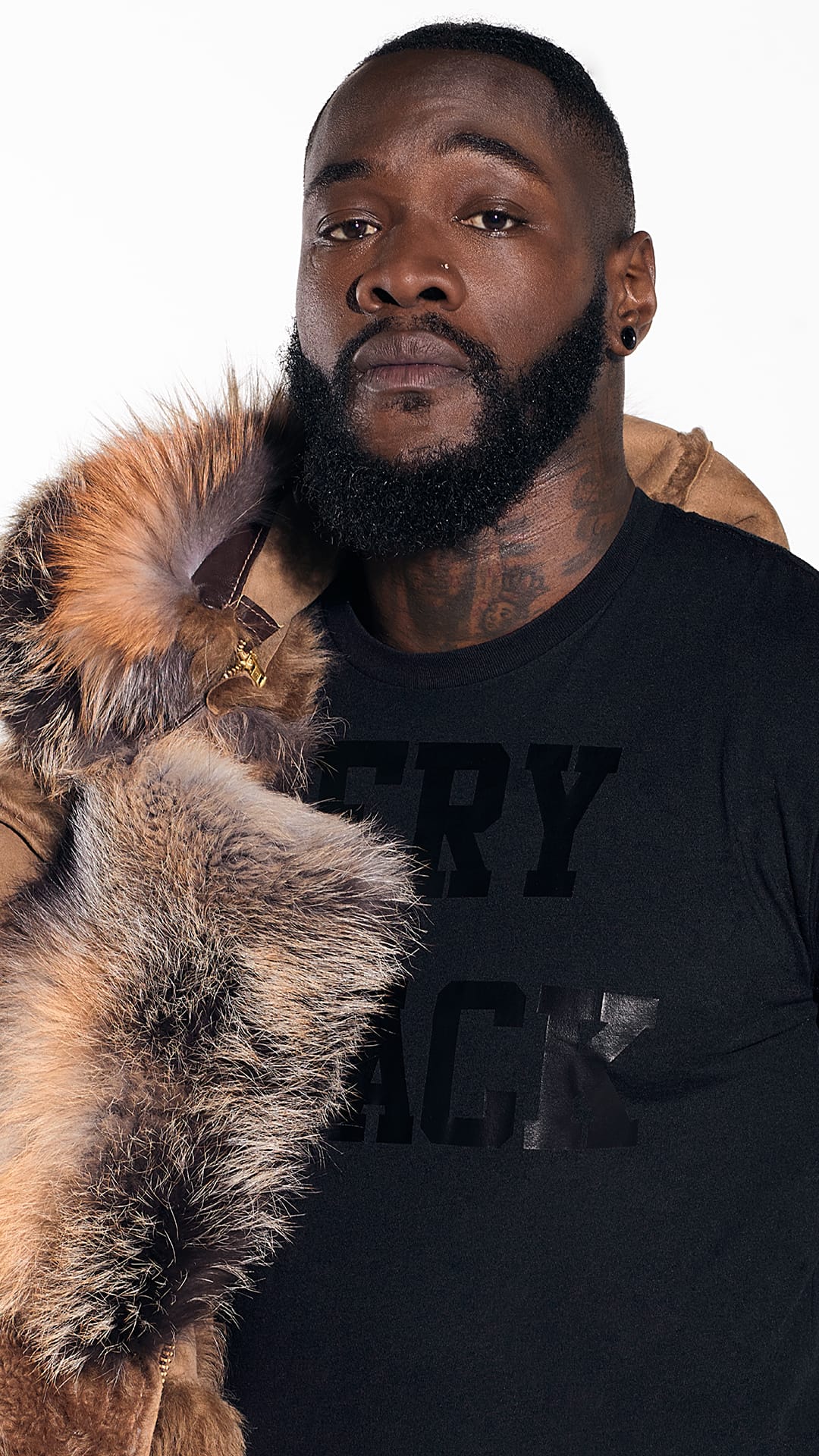
DEONTAY WILDER: TRUE GRIT
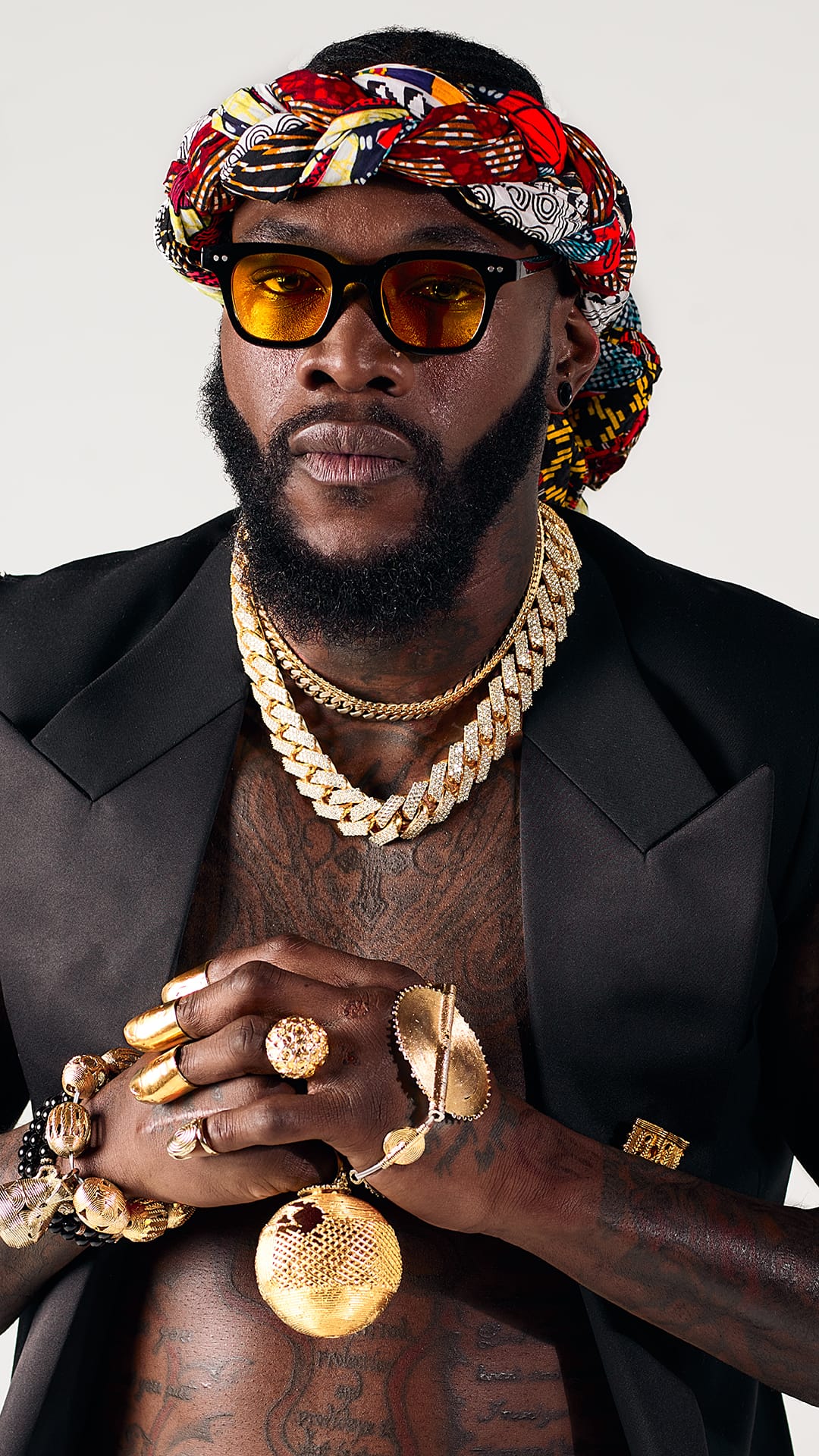
"The city of Tuscaloosa, Alabama, is named after a tall warrior of dark complexion—a Native American chief whose story has so much in common with its modern resident, the boxing champion of the world, Deontay Wilder, that you would think one the reincarnation of the other. Wilder is all"
The city of Tuscaloosa, Alabama, is named after a tall warrior of dark complexion—a Native American chief whose story has so much in common with its modern resident, the boxing champion of the world, Deontay Wilder, that you would think one the reincarnation of the other. Wilder is all about protecting his family, building his tribe, and searching for the roots that connect him to a continent he has not yet visited but already knows is home.
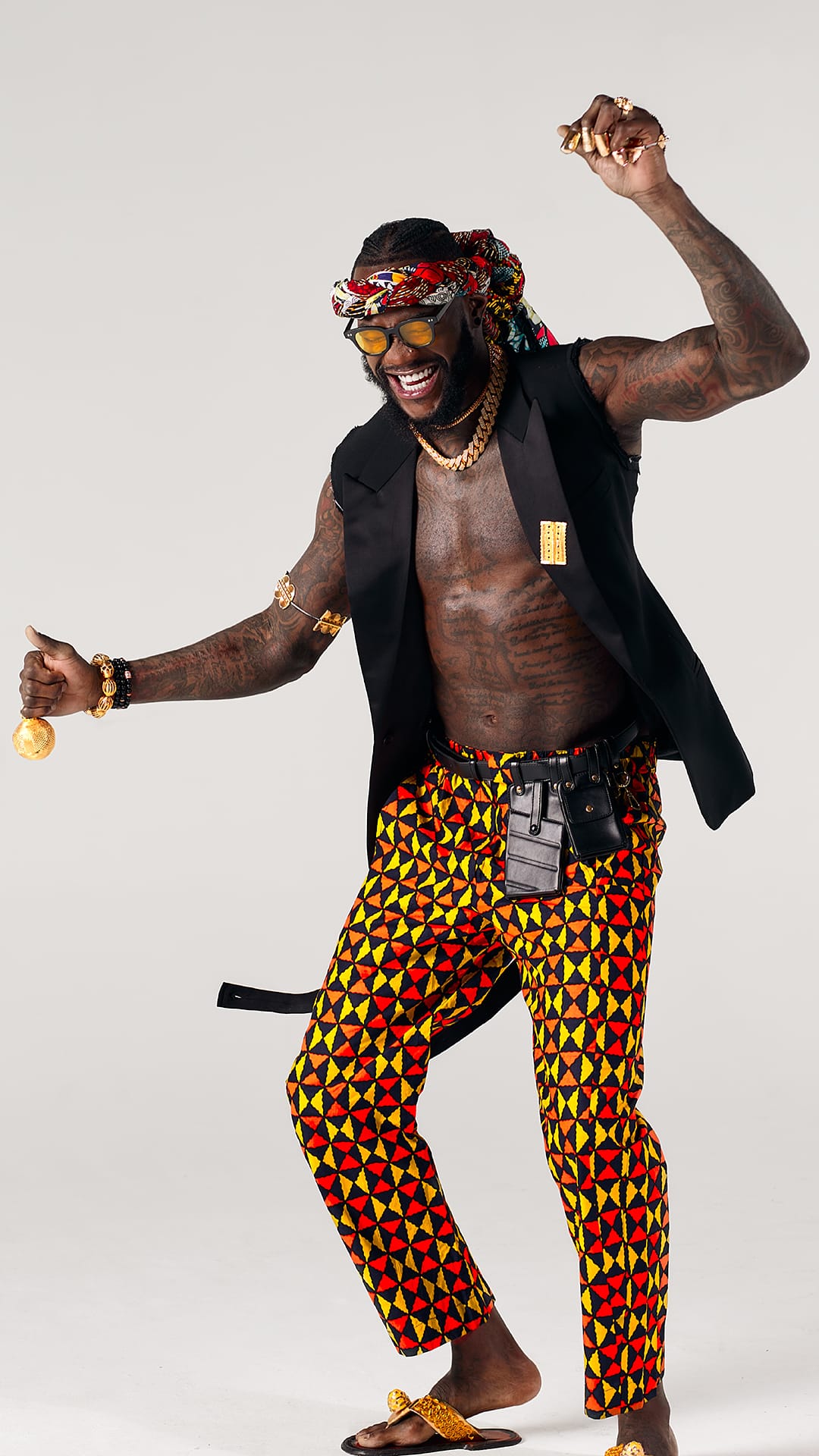
The man with the right hand that has ended careers sat down with us to talk about his debut, his daughter, meditation, and his African bond.
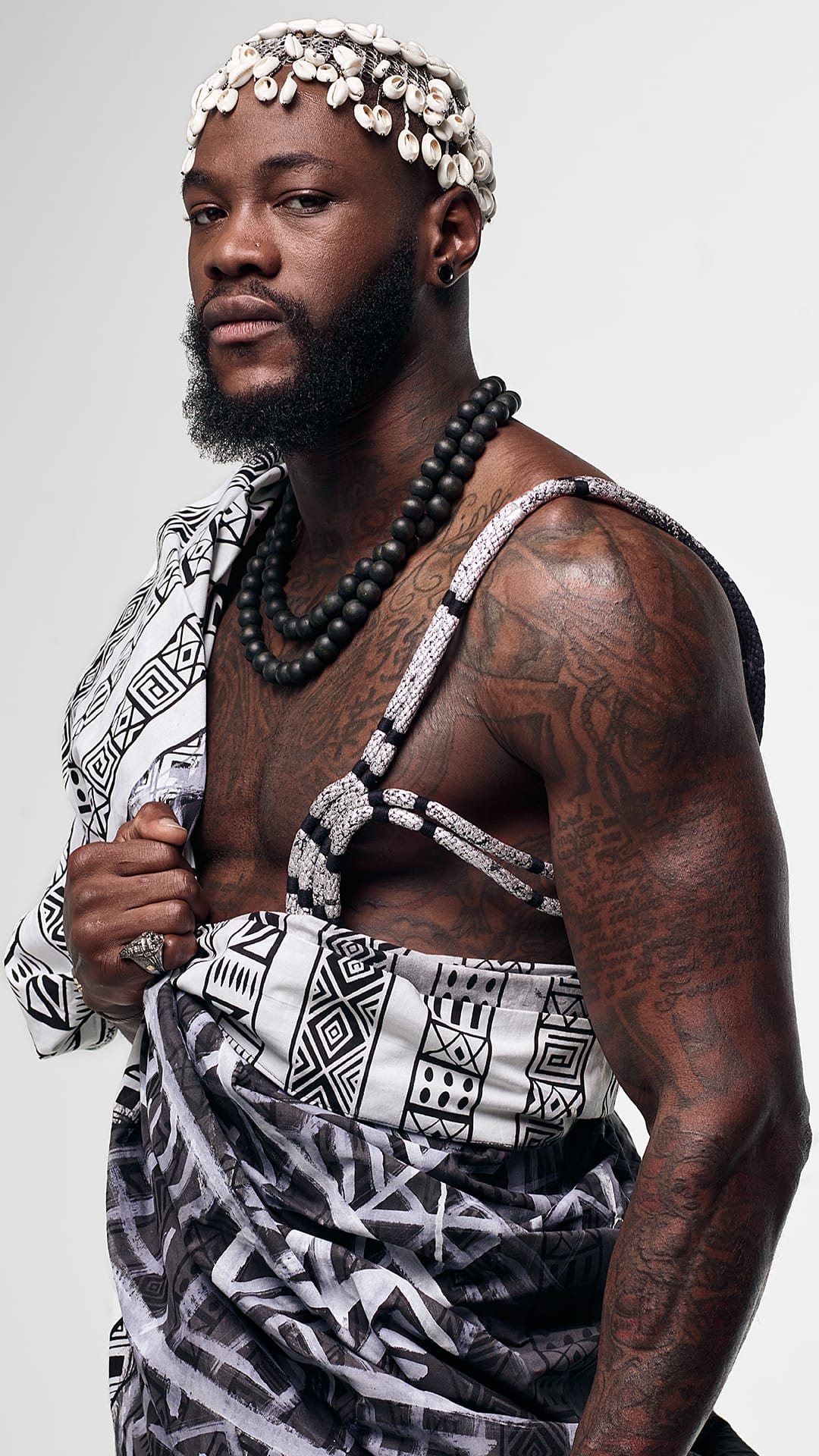
Naieya
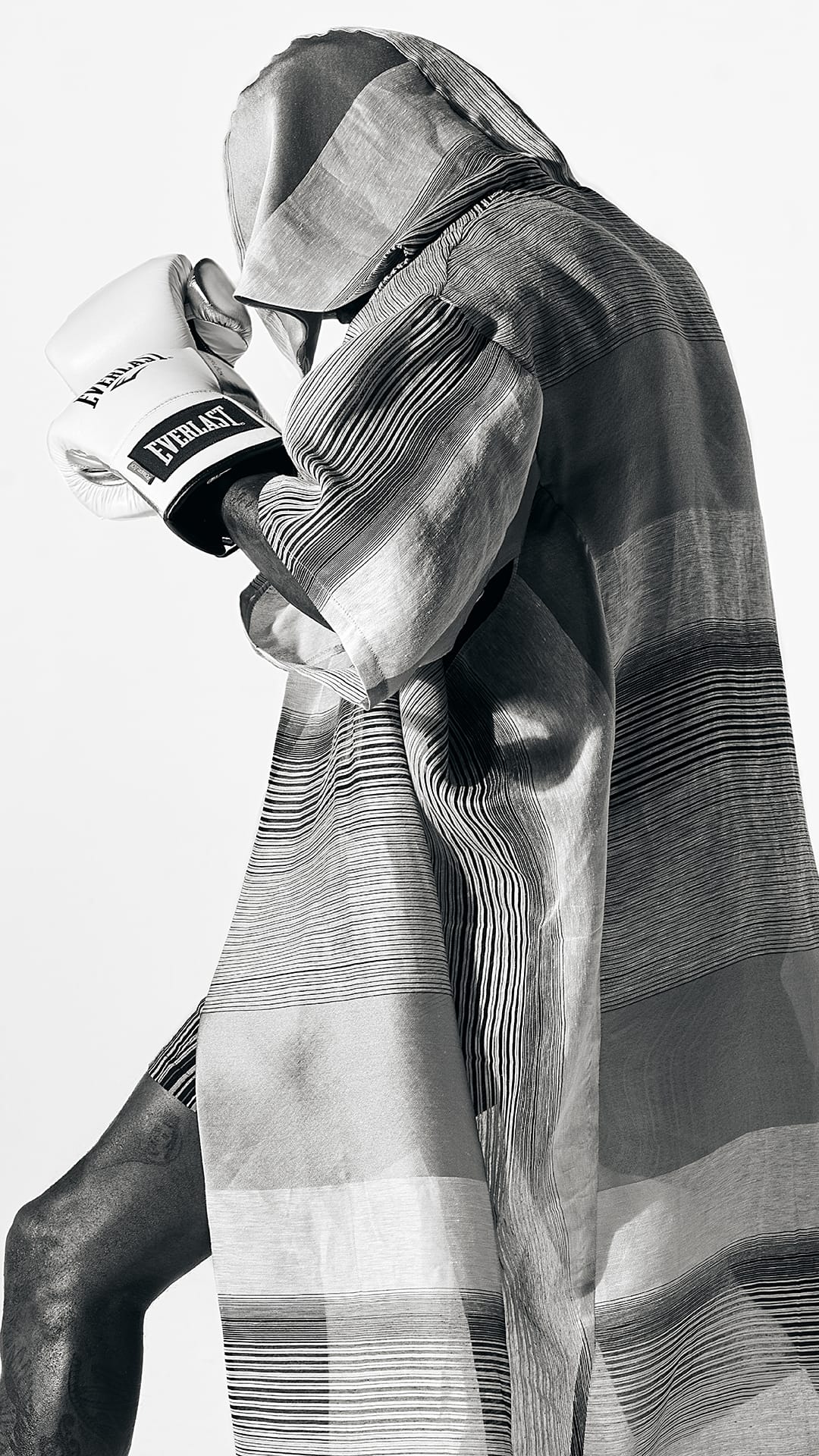
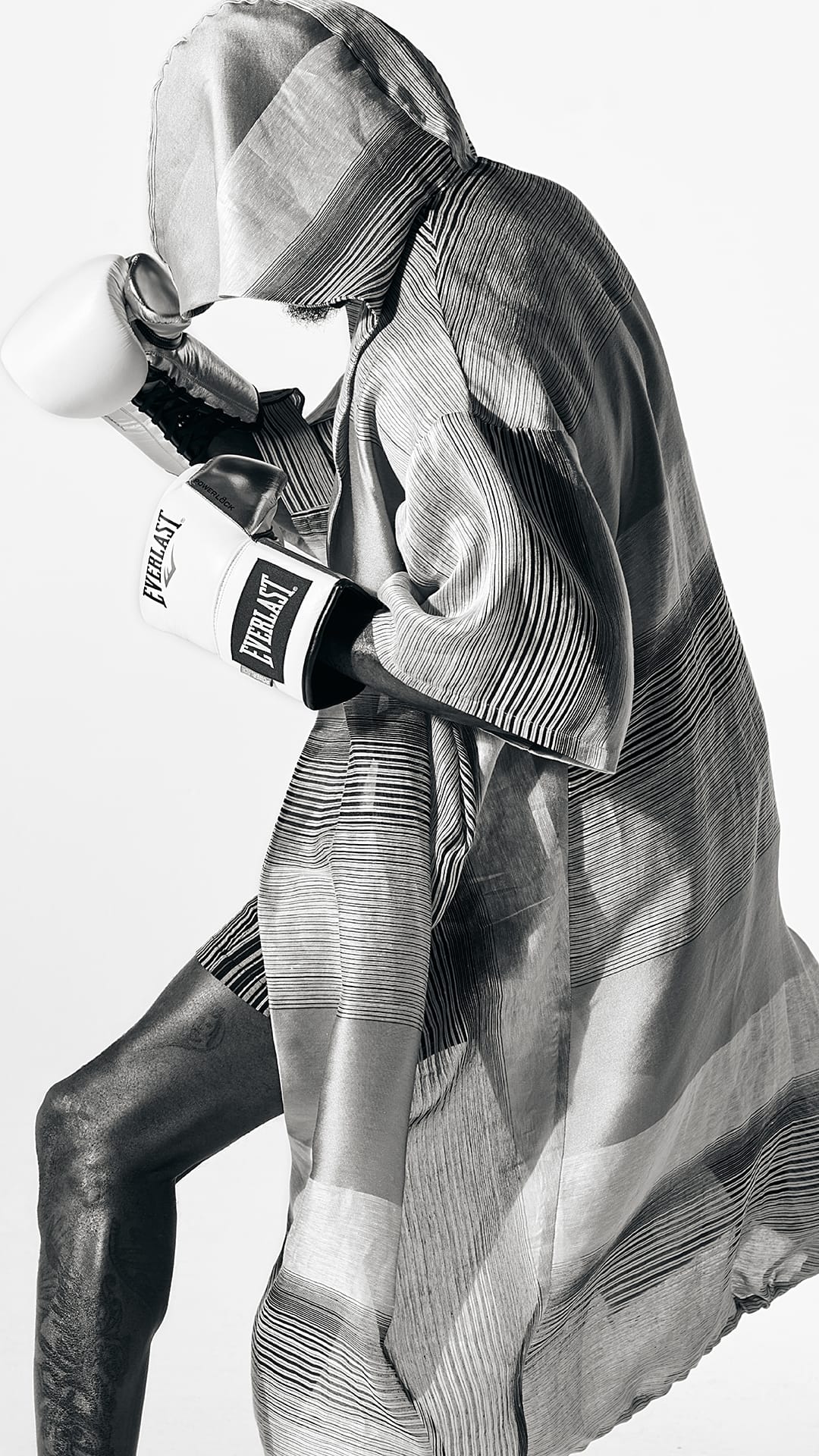
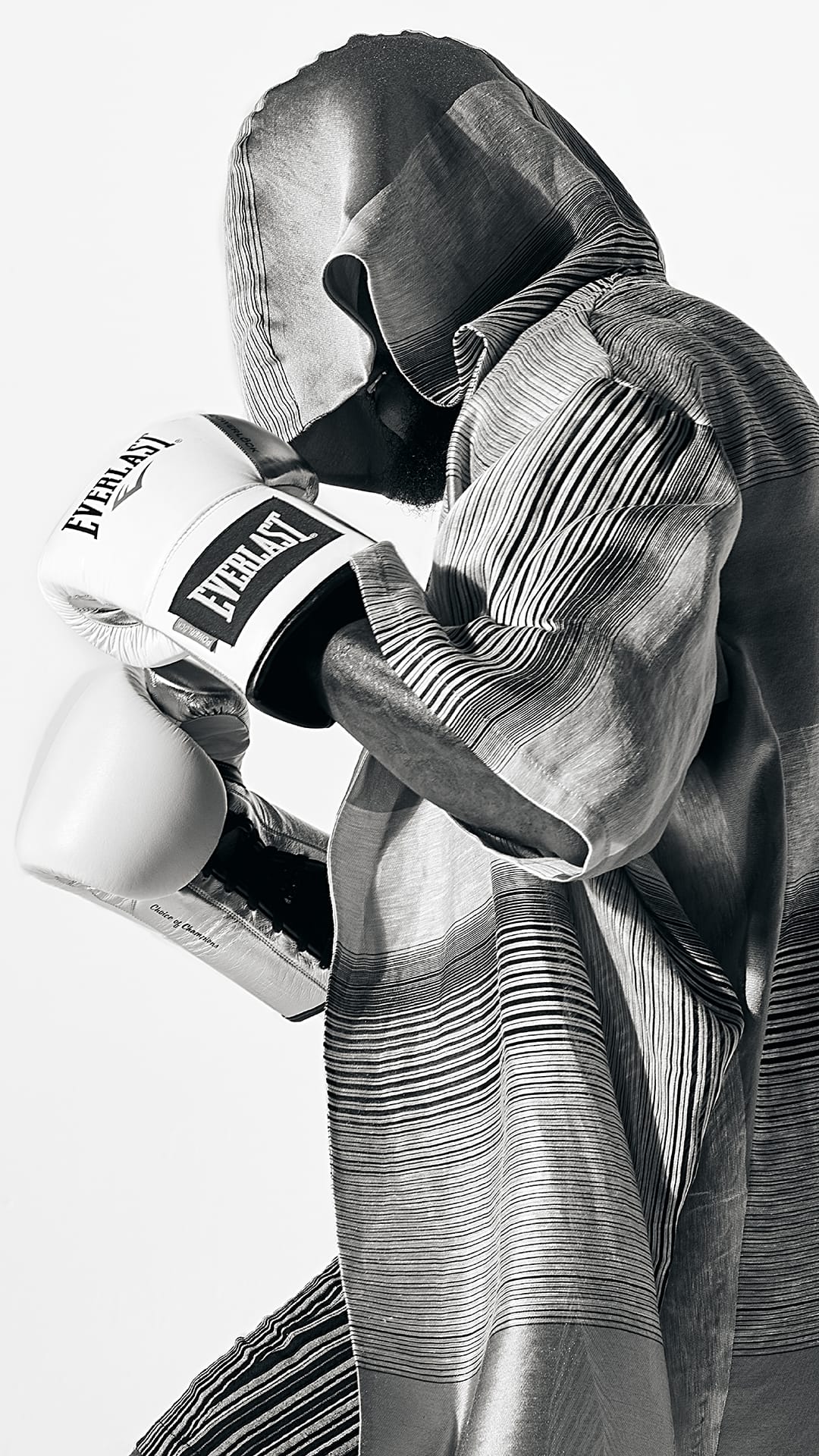
"She's doing amazing. It's a blessing to see how far she's come, with so many obstacles that were put in front of her." Naieya—his daughter, born with spina bifida—is the reason Wilder took up boxing. The doctors said she would never walk. "She's running, she's walking, she's doing all of that." He needed money. He thought of boxing. He thought every fighter on TV was making a fortune. "When you get into the sport, your bow is bust quickly."
He made the right decision. He knows it now. He knew it then.
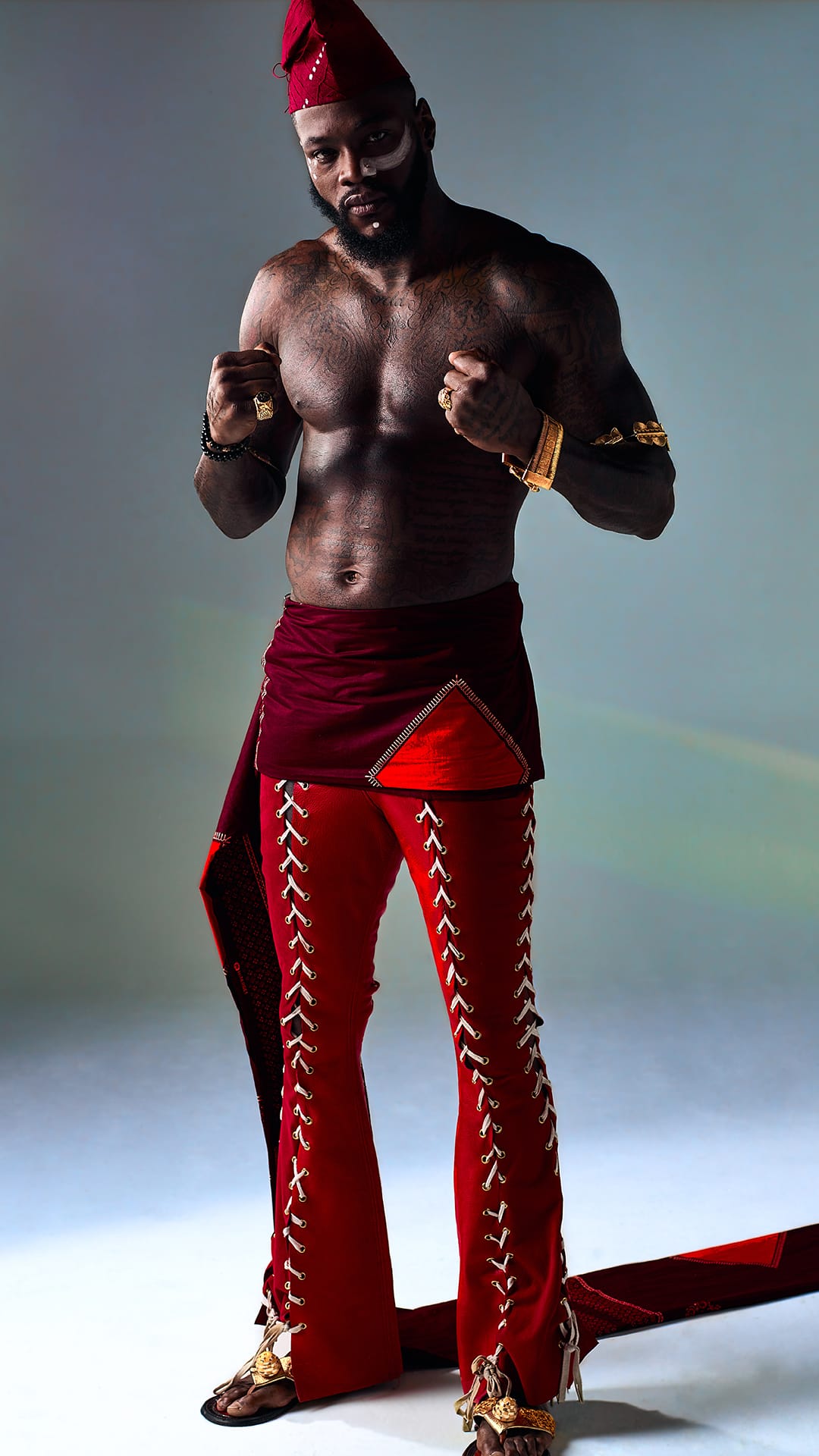
The Gym, the Moment, the Purpose
Three months into training, he sparred a seasoned pro. He dropped him in the first round. The gym went silent. "This one," the veteran said, "keep him in the gym." That was the turning point—not toward the Olympics, not toward the heavyweight title, but toward understanding what he was capable of. "It changed my whole purpose from becoming a journeyman to making it to the Olympics."
"Everything in my sport is what we deal with in life. The strong and the weak. The decision. I ended up winning the fight because I came too far to give up."
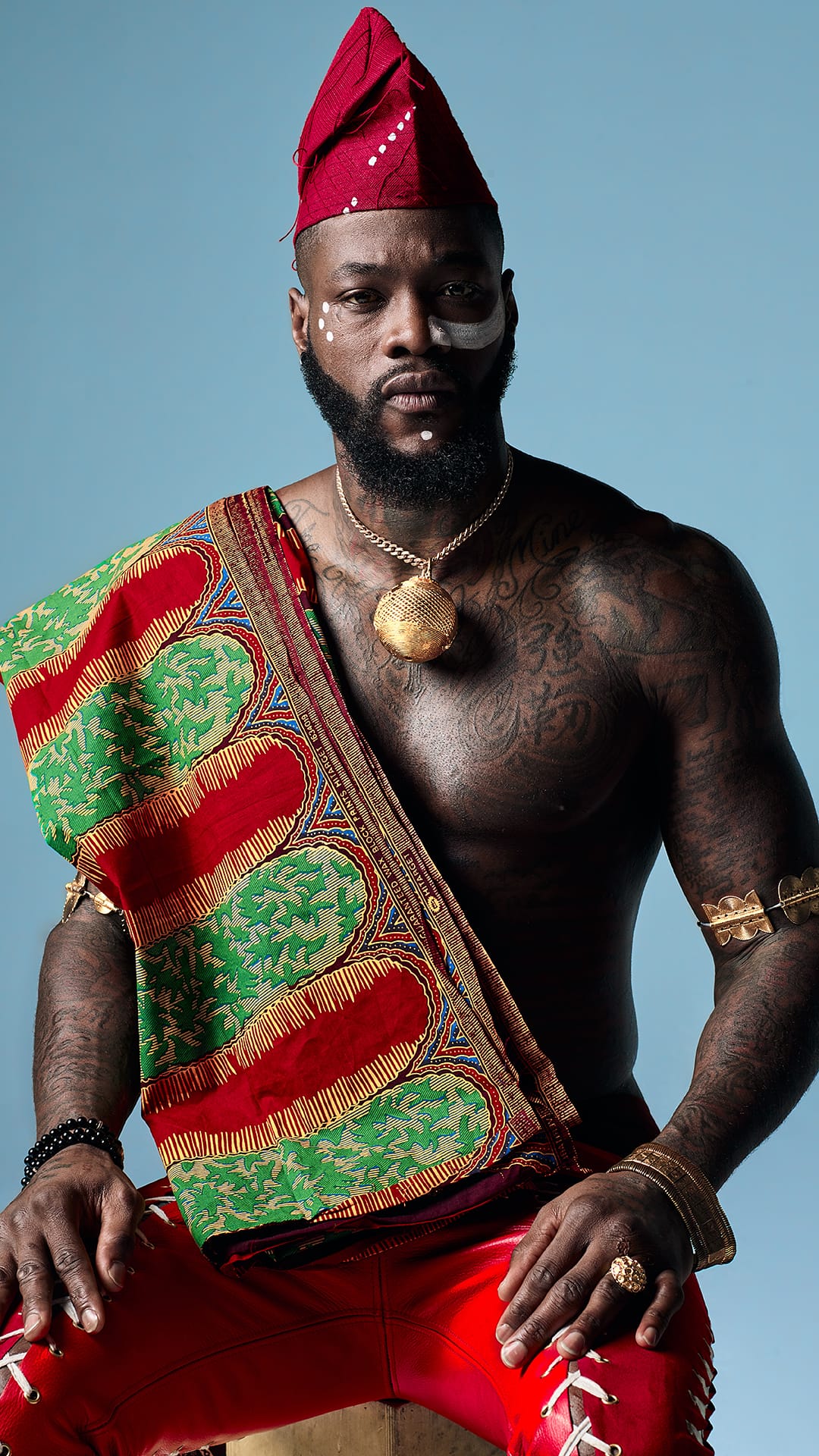
African Ancestry
"It is very important," he says of his DNA research into his African heritage. "Other ethnic groups can tell who their families are or where they came from. But it seems like Black people are the only ones who don't know their foundations." He did the research. He got the results. He is planning the visit.
"It's gonna be amazing just to put my feet on that solid ground and just to be able to roar." He means it literally. "I can't wait to get loose when I get there."
The Youth
He went back to his former high school. He gives back continuously—not once a year, but as a way of living. "In order to instill the principles and morals we want to teach them, we have to do something continuously. It has to be a continuous motion in the act." He knows what it means to have someone push you when you have nothing. He provides that push now.
"There is nothing like being remembered as a man that has principles and morals. Someone that stood for something—not just followed the crowd." That is the legacy Deontay Wilder is building. One fight, one child, one community at a time.
Photography by J.D. Barnes. Styling by Sarah MK Paris.